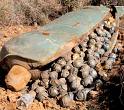


As regular readers of the blog may have gathered, I've been working this year on a history of international efforts to address the humanitarian impacts of cluster munitions.
This history, to be published before the end of the year, focuses in particular on the Oslo process, which culminated in a Convention on Cluster Munitions in negotiations in Dublin in May 2008. But it also casts an eye much further back to the origins of international cluster munition work, which date from the Swiss Diplomatic Conferences in the 1970s and proposals there by Sweden and others to prohibit "cluster warheads".
Chronologically speaking, the Oslo process, which ran for approximately 15 months from February 2007 until the end of May 2008, was just the tip of the iceberg. There was a lot more under the surface. Concerns had been raised about the hazards cluster munitions pose to civilians both at time of use and post-conflict for many, many years by governments and NGOs. My impression is that this isn't necessarily widely understood when multilateral practitioners think about lessons to be learned (or not) from recent international efforts on cluster munitions. Nor is the question it poses but which is often not raised: why did the Oslo process get traction when previous efforts failed?
The easy thing to do would be to point to the 2006 summer war in Southern Lebanon between Israel and Hezbollah and the massive use of cluster munitions there as the catalyst. Others disagree: Virgil Wiebe, for instance, whose posts have graced this blog in the past, feels strongly that the Lebanon conflict was "necessary but not sufficient". Certainly, determination among Norwegian policy makers to get an international process going on a treaty to ban cluster munitions that cause unacceptable harm to civilians pre-dated Lebanon. And NGOs in the Cluster Munition Coalition had been preparing for a break with the UN Convention on Conventional Weapons' talks in late 2006 unless its five-yearly review conference agreed on more meaningful work to restrict the weapon. So clearly the picture is more complex than it first appears.
The deeper I got into research for the history, the more convinced I became that it's difficult to draw useful lessons about the Oslo process for future 'humanitarian disarmament' endeavours without having this historical context. Fortunately, Eric Prokosch's classic book 'The Technology of Killing: A Military and Political History of Anti-Personnel Weapons' (Zed Books, 1995) is an excellent resource. (This book is unfortunately out of print, but second-hand copies can be scrounged via the internet and second-hand bookshops, and should be required reading for all Geneva multilateral diplomats, in my view.) Eric also has been very kind in sharing his insights in the course of my research about how cluster munition-related concerns evolved from their early days.
Such perspectives are important. Many of the other people I've interviewed and conversed with in the course of writing my book have quite reasonably drawn their own conclusions about what we can learn from international efforts on cluster munitions, but most do so based on their impressions of events this decade. However, if one only looks at the last few years the achievement of the cluster munition ban treaty might have looked simply spontaneous, and even easy - even though it was neither.
The impact of the Ottawa process on anti-personnel mines in the 1990s and the resulting 1997 Anti-Personnel Mine Ban Convention also needs to be considered. There are many similarities between the Ottawa and Oslo processes, and the former's example was at the very least a major inspiration to most of those centrally involved in the Oslo process. But again, context is important. A two-day seminar we convened in November last year with various multilateral practitioners on lessons learned from the Ottawa and Oslo processes underlined that there are divergent viewpoints on what kind of 'model' that the most obvious similarities between the two processes offer, or whether they constitute a model at all. (These similarities include free-standing activity outside traditional UN forums propelled by like-mindedness rather than universal participation, government-civil society partnership, and emphasis on humanitarian perspectives.)
The British historian Hew Strachan recently wrote in the journal Survival with regard to the Iraq war that "As history is turned into political science, it makes a casualty of contingency". It's a phrase I have written on my office whiteboard as a continual reminder. The most elegant international relations theories don't convincingly account (in my mind at least) for the role of individuals in the Oslo process. If anything is really clear to me, however, it's that individuals were key to that success.
I'm pondering all of this as I prepare to write my concluding chapter of the draft manuscript after a week off. Earlier this year, I related the Japanese novelist Haruki Murakami's comment that writing books is a bit like marathon running. I'm looking for my second wind!
John Borrie
Image credit: photo-montage of an iceberge from Wikipedia.org.
Wednesday, 10 June 2009
The tip of the iceberg
Friday, 29 May 2009
On this day…change can happen !

Today’s launch of the report ‘Banning Cluster Munitions – Government Policy and Practice’ marks the first anniversary of the CCM’s adoption and the beginning of the Global Week of Action on Cluster munitions. The 288 pages long report was written by Human Rights Watch (HRW) in partnership with Landmine Action and produced by Landmine Monitor. Compiled in record time, the report gives an introduction to cluster munitions, the ‘Oslo Process on Cluster Munitions’ and to the CCM itself. It provides up-to-date figures on cluster munitions use, production, stockpiling, transfer and disinvestment in cluster munitions manufacturers. And, most importantly, it documents government statements, parliamentary actions and civil society initiatives on cluster munitions in 150 States, that is, all States that took part in the ‘Oslo Process', and all States that are known to stockpile cluster munitions today.
‘Change can happen!’ exclaimed the representative of HRW at today's launch event. The report provides a historical record of how numerous States’ policies and practices on cluster munitions have changed over the course of the last few years. To date, 96 States have signed the CCM, of which 35 have at some stage in the past used, produced, stockpiled or transferred cluster munitions. And 7 States have already ratified treaty. Several more have indicated that they would deposit their instrument of ratification shortly, so that the treaty can be expected to enter into force in 2010.
Importantly, as the report notes, policy shifts also took place in States not involved in the ‘Oslo Process’. The U.S., for instance, has recently enacted a permanent ban on cluster munitions exports. Such practices also contribute to the stigmatization of cluster munitions as weapons that are unacceptable because of their negative humanitarian impacts.
The report will also serve as a baseline for the future implementation of the CCM by State Parties. Remarkably, Spain has already destroyed all of its cluster munitions stockpiles, even prior to the treaty’s entry into force. This bodes well for the effective translation of treaty obligations into concrete national implementation measures, and several other States are expected to destroy their stockpiles in the course of 2009. In support of the timely implementation of this particular treaty obligation Germany will host a Conference on the destruction of cluster munitions stockpiles in Berlin next month.
Change also happened elsewhere in Geneva today: after a decade-long struggle, the Conference on Disarmament (CD) finally adopted a Programme of Work! Some diplomats already suspect they will soon remember with fondness the days of fruitless discussions and blockage in the CD in view of the daunting negotiations that lie ahead of a treaty banning the production of fissile material for nuclear weapons - the only negotiation mandate included in the Programme of Work.
Wednesday, 20 May 2009
Can the nuclear Siamese twins be separated?

- Hannes Alfvén, Swedish physicist and Nobel laureate
From the very outset of the nuclear age, the challenge has been to facilitate the civilian use of nuclear energy while curbing nuclear weapons. But, as Robert Oppenheimer once observed, “the close technical parallelism and interrelation of the peaceful and the military applications of atomic energy” make countering nuclear proliferation an especially difficult task. At the heart of the problem is a large overlap between civilian and military applications of nuclear energy, which both depend essentially on the same key ingredient: fissile material.
Today the world faces the prospect of a nuclear “renaissance” – a potential expansion in the use of nuclear energy worldwide. Energy supply is a critical economic, national security, and environmental issue for our planet and nuclear energy could be a vital part of the energy mix providing energy in quantities needed to decrease our dependence on fossil fuels.
We don’t know now if there really going to be a nuclear “renaissance” and what form it will it take. But the revival of interest in nuclear power could potentially result in the worldwide dissemination of uranium enrichment and spent fuel reprocessing technologies. This presents obvious risks of proliferation as these technologies can produce fissile materials – high enriched uranium and separated plutonium – that are directly usable in nuclear weapons. As a result more states could acquire the capability to produce materials directly usable for, or easily converted to, explosive use.
And they can do it completely legally. Article IV of the Treaty on the Non-Proliferation of Nuclear Weapons (NPT) guarantees “the inalienable right of all the Parties to the Treaty to develop research, production and use of nuclear energy for peaceful purposes”, including technologies of uranium enrichment and fuel reprocessing.
The International Atomic Energy Agency (IAEA) seeks to inhibit the use of nuclear energy for military purposes through the system of international safeguards. But the acquisition of uranium enrichment and spent fuel reprocessing facilities would bring states a long way toward nuclear weapons even without directly violating the NPT, namely without “diverting” special nuclear material and, therefore, without any possibility of being restrained by IAEA safeguards designed to verify whether material has or has not been diverted.
One does not have to look far for an example. Japan is currently the only non-nuclear-weapon state that operates all the elements of the complete nuclear fuel cycle. It has a very advanced nuclear infrastructure, including commercial-scale enrichment and reprocessing plants, large quantities of nuclear material (more than 45-metric tons of separated plutonium), modern nuclear scientific, engineering and production capabilities. It’s to Japan’s credit that it has a perfect NPT compliance record and has pursued a consistent policy of non-weaponization of nuclear technology. None of this changes the reality that the country is a “screwdriver turn” away from acquiring nuclear weapons – in months rather than years – if it took the political decision to go nuclear. Indeed, periodically this question resurfaces in Japan and just recently several retired military officials argued that the country should consider possessing nuclear weapons.
Should a nuclear “renaissance” result in more non-nuclear-weapon states acquiring enrichment and reprocessing facilities, the task of safeguarding such facilities could place significant additional work load on the IAEA – already strained both in budget and personnel. Moreover, safeguarding commercial-scale enrichment and reprocessing plants poses significant verification challenges. That’s because large plants process so much nuclear material over the course of their operation that it’s very complicated to make accurate material-accountancy measurements as part of ensuring none of this material has been diverted. Moreover, if a Fissile Material Cut-off Treaty (FMCT) is negotiated and agreed, its verification could mean placing under safeguards enrichment and reprocessing facilities in the nuclear-weapon states and non-NPT states, which now are mainly outside the international safeguard system. All of this will require resources and strategic foresight.
All of this said, nobody should contest the right of any nation to utilize nuclear energy in a secure, safe and environmentally sound manner. So key questions are these: how should the international community address the growing security and proliferation risks from the nuclear fuel cycle? How can the international community limit access to sensitive nuclear technologies, all the while protecting states’ rights to develop the peaceful use of nuclear energy?
Continued nuclear development along national lines – the situation we have now – presents a sort of 'Catch-22' because it will create additional proliferation risks undermining the international nonproliferation regime. Even if a large-scale nuclear “renaissance” doesn’t occur, it would not help much. Many countries would not willingly agree to indefinitely preserve the de-facto existing “two-tier” system where some nations – essentially the members of the Nuclear Suppliers Group – are entitled to nuclear fuel cycle technologies, and others are not. Some of them may decide to acquire their own enrichment or reprocessing capabilities, decisions perhaps for political and national strategic reasons rather than primarily driven by economic considerations.
So, how is the nuclear puzzle to be solved? Let’s go back to 1946, when The Report on the International Control of Atomic Energy (generally known as the Acheson-Lilienthal Report) appeared. At the time, the report contained a stark warning: “A system of inspection superimposed on an otherwise uncontrolled exploitation of atomic energy by national governments will not be an adequate safeguard”. The Acheson-Lilienthal report was the first effort to define a policy on the international control of atomic energy. But, in the condition of the time, the task of establishing some form of international authority over the most dangerous aspects of the nuclear fuel cycle proved impossible. Instead, the international community eventually adopted the very approach - occasional inspection by the IAEA - criticized by the report’s authors.
More that sixty years later we face the same problem, only on a much bigger scale. And again it seems that multilateralization can offer a gateway to nuclear fuel cycle services for any nation. A multilateral approach to the nuclear fuel cycle, if appropriately arranged, has substantial potential to ensure that the benefits of nuclear energy are made available to all states, while strengthening the nuclear non-proliferation regime and reducing incentives to build new nuclear fuel cycle facilities in states that do not now have them.
The rationale for multilateral approaches to the nuclear fuel cycle is relatively straightforward. In the case of a multinational enrichment or reprocessing facility, in which ownership, control or operation are shared among a number of states that can watch each other, all of its participants are under a greater degree of peer scrutiny. This would make it more difficult and riskier to cheat. The possibility of seizure of the facility by the host country would always be present, but because of the ensuing confrontation between that country and the other participants and the international community, a considerable political barrier inhibits such action.
The use of multinational facilities instead of an array of national facilities would reduce the number of plants to be placed under safeguards, increasing the feasibility of continuous inspection while possibly reducing costs of these inspections. Multinational facilities could also serve as confidence-building measures, helping to reduce suspicions among participating states about each other’s nuclear weapon intentions. Moreover, large multinational fuel cycle facilities could be cost effective and provide economies of scale smaller national facilities would probably lack. Multilateral fuel cycle mechanisms could respond to the “entitlement” motivation of the customer states in terms of their participation in ownership, management, operation, decision-making, profit-sharing, and so on.
A way to solve the nuclear puzzle is ultimately to “denationalize” sensitive nuclear fuel cycle activities – first of all, uranium enrichment, spent fuel reprocessing, and fabrication of mixed plutonium and uranium oxide fuel – and convert the current “two-tier” system into a truly multilateral fuel cycle arrangement of equal rights and obligations. This multilateral fuel-cycle arrangement could benefit the whole of humankind as:
• The existing “two-tier” system would be virtually eliminated
• “Entitlement” motivations of customer states would be satisfied to a great extent, especially if new multilateral facilities were created taking into account regional considerations
• Open and non-discriminatory access to nuclear fuel services would be guaranteed
• Without nationally-controlled uranium enrichment and spent fuel reprocessing facilities no fissile materials for military purposes would be produced
• It would be difficult to justify a national enrichment or reprocessing program
• No states with nationally-controlled “threshold” capabilities would exist, which is important in a world moving toward nuclear disarmament
The task is tremendous: it is not easy getting international support for dramatic changes in the way we use nuclear energy. Nonetheless, we have no choice if the world is to be protected from the misuse of sensitive nuclear technologies. To begin with, the international community should conduct in-depth discussions and thorough analysis of the technical, legal, political and economic aspects of various proposals and ideas for multilateral nuclear fuel cycle frameworks. The long lead-times for nuclear construction allow us to do that. But states involved cannot allow themselves just to waste this time indulging in endless and selfish politicized arguments.
This is a guest post by Dr. Yury Yudin. Yury is a Senior Researcher at UNIDIR and manages the project ‘Multinational Approaches to the Nuclear Fuel Cycle'. A pre-publication version of his new study paper, 'Multilateralization of the Nuclear Fuel Cycle: Assessing the Existing Proposals' is available in PDF format by clicking here.
Picture credit: photograph of a centrifuge cascade (part of the nuclear enrichment process), courtesy of the IAEA's Image Bank.
Thursday, 14 May 2009
Not so apocalyptic

Since he assumed office, there has been great optimism among many pundits (and a certain amount of dismay among some of the conservative Gaffney-types) that U.S. President Barack Obama would assume a much greater leadership role than the previous Bush administration on efforts at the multilateral level toward nuclear disarmament.
Obama seems to have become president in the middle of something of a 'perfect storm' - with a global financial crisis (including the near bankruptcy of huge American carmakers GM and Chrysler), a deteriorating security picture in Afghanistan and Pakistan, the ongoing Iranian and North Korean nuclear sagas and even a swine flu pandemic outbreak. Obama versus the four horseman of the apocalypse it would seem. So one might be forgiven for thinking that the Obama administration might put good intentions about nuclear leadership on the back burner.
And talk is cheap. The truth is, that until the NPT Preparatory Meeting that began at the beginning of last week in New York, no-one outside the U.S. government really knew what kind of tone the new administration would try to set, especially as its ambassadorship to the Conference on Disarmament has been empty, and it has generally kept pretty quiet in Geneva so far this year.
I attended parts of last year's second Preparatory Meeting in Geneva, and to be honest it was a bit of a depressing spectacle. Nevertheless, but for infernal book writing I would love to have gone to New York this May to see if the atmosphere has changed. By various accounts, the U.S. delegation, led by Rose Gottemoeller, seems to have set a very positive tone, reading a message from President Obama to the meeting, and delivering an assessment of the U.S.'s basic positions on the disarmament, non-proliferation and nuclear energy pillars ot the NPT.
From time to time, I've been reading Ray Acheson of Reaching Critical Will's very useful blog following the course of the NPT meeting, which said this about Gottemoeller's statement:
"She reaffirmed that the U.S would seek ratification of the Comprehensive Test Ban Treaty and negotiations on a Fissile Materials Cut-off Treaty. Most importantly, she reaffirmed the decision to extend the NPT in 1995 and decision made at the 1995 and 2000 Review Conferences, including the 1995 Middle East resolution."Good one. Nevertheless, theNPT Preparatory Meeting hasn't finished yet, and Acheson noted that it remains unclear whether it will be able to agree draft recommendations by the end of the week:
"The amount of time remaining could possibly allow for a second revised document to be offered Thursday afternoon, giving the PrepCom a last chance to adopt it Friday afternoon. However, if the Committee cannot agree to adopt the revised document on Thursday, it is likely that the Chair will have to forward it to the RevCon as a working paper, despite his aversion to such a solution."Reaching Critical Will (which is a project of the Women's International League for Peace and Freedom) also did great work in reporting on the Oslo process, which delivered the Convention on Cluster Munitions (CCM) last May in Dublin, and which we also covered extensively on this blog. There are positive developments on the CCM front too.
The CCM needs 30 ratifications to enter into force. 94 states signed the treaty in Oslo last December, and now the count stands at 96 with seven (Austria, The Holy See, Ireland, The Lao People’s Democratic Republic, Mexico, Norway and Sierra Leone) having ratified. This is actually pretty good going, given the challenges involved in national legislation processes. It now looks like two pretty big countries - Germany and Japan - are likely to ratify by the end of May. This is great news, as is Germany's commitment to hosting a conference on cluster munition stockpile destruction issues in Berlin in June. And ratification is in the pipeline for a bunch of others, with results starting to emerge before the summer recess.
It means we could be looking at international entry into force of the CCM sometime in early 2010, all going well. Lao PDR (the most cluster munition affected country - bombed to smithereens in a secret U.S. bombing campaign in the 1960s and early 1970s) has offered to host the CCM's first meeting of states parties, which underlines the commitment of affected countries to the treaty. I believe planning for the meeting has (wisely) already started.
Under the Bush administration, the U.S. shunned the Oslo process, although American legislators like Leahy and Feinstein have been very supportive of it. It'd be great to see some of Obama's magic bridge-building in the context of the the CCM too.
John Borrie
Picture credit: Albrecht Dürer's The Revelation of St John: The Four Riders of the Apocalypse, 1497-98, Woodcut, 39 x 28 cm, Staatliche Kunsthalle, Karlsruhe. Image downloaded from Wikipedia.
Wednesday, 6 May 2009
Why we need games that aim to build peace

This is a pity. It is a missed opportunity for gamers because the peacebuilding challenge is a great test of strategic skill, combining the challenges of governance with those of war-fighting. If war to Clausewitz was ‘politics by other means’, then peacebuilding is to the parties to a conflict often an experiment in ‘war by other means’. In other words, it is based on a rational calculation by the parties that they will benefit more from the peaceful pursuit of politics. The objective of a virtual peacebuilding game would be to achieve a just and sustainable peace. You would loose if a significant number of the actors revert to violence as a means of pursuing their interests. Your score would depend on the extent that you manage to marry stability with reform. For instance, you will get extra points for also navigating the challenges of ‘right sizing’ the army, reforming the civil service, holding elections, and luring in development assistance as well as private and public investment. Beginners could choose a simple version with a small number of actors and hints in the form of a comprehensive peace agreement, and a plan for its implementation. More difficult levels of the game might increase the number of parties to the conflict and divide external actors, giving each somewhat different preferences. It might also introduce factors such as the presence of high-value natural resources that raise the stakes of being ‘in’ government. The most difficult levels might model peacebuilding in the midst of war – where war-fighting games are combined with peacebuilding ones. Whether this was designed for a single player with the ability to manipulate all actors, or multiple players each assigned to one party, it would present the player with engaging dilemmas and strategic calculations of risk.
Gaming peacebuilding does not only have entertainment or brain-teasing potential however. It also is of academic interest; it has the potential to improve our understanding of the strategic interaction between domestic and international actors in post-conflict situations. This has been done to great effect by Barnett and Zuercher in their article The Peacebuilder’s Contract: How External State-Building Reinforces Weak Statehood. In it, they model strategic bargaining between international actors, state elites and local elites in post-conflict contexts. Their model assumes a post-colonial context in which states (even before the conflict) had little legitimacy or capacity and where regime stability was underpinned by patrimonial politics. In this model political and economic survival of the state elites depends on the ability to co-opt or deter challengers from the periphery through an (expensive) patronage system. It is assumed that state elites want to maintain their power. External actors are unified and desire first and foremost stability and secondarily liberalization. Rural elites want autonomy from the state and to maintain their power in the countryside.
This simple model also rings true when considering individual cases. Take the one that the West is currently most engaged in: Afghanistan. Barnett and Zuercher argue that in Afghanistan the peacebuilding ‘game’ was first characterized by co-operative peacebuilding between the new Karzai government and the peacebuilders (based on a weak government and an extraordinarily strong and generous external intervention) and captured peacebuilding between the rural elites peacebuilders (based on relatively strong elites and the fact that the US was also dependent on their co-operation for counter-insurgency purposes). As the power of the rural elites grew (in part as a result of the US war on the Taliban) state elites became increasingly reluctant to implement the liberal reforms that might alienate rural elites. Peacebuilders accepted these conditions because of their preference for stability.
Gaming the strategic interaction of peacebuilding also has operational value. Of course those who are party to a conflict at the strategic and operational level are well aware of the complex politics of peacebuilding. Most peacebuilders that ‘work on’ the operationalisation of Disarmament, Demobilisation and Reintegration of former combatants (DDR), Security Sector Reform (SSR) or financial and administrative capacity building and reform should also be acutely aware of their intended and real impact on the dynamics of the peace process. But this is not adequately reflected in policy discourse. Rather, at the international level, policy discussions about peacebuilding are first and foremost linked with efforts to address how the international community should get its act together so as to maximise its leverage in peacebuilding contexts. These typically involves debates about how best to mobilise financial and human resources, and how to promote ‘unity of purpose’, including through strengthened international leadership and improved co-ordination. These are important issues, but they do not address the domestic politics of peacebuilding. Instead, the ‘demand-side’ of peacebuilding is effectively side-lined by invoking the principle of ‘national ownership’ – a conceptual place-holder for the domestic politics of the peace process. Similarly, the call for external aid ‘alignment’ with national priorities obscures much more than it reveals. Worse, much of the language of aid implies that building national capacity or aligning international aid priorities with domestic ones is a technical issue, when it is clearly political. We need policy frameworks that recognise the conflictual nature of peacebuilding rather than ones that suggest it is a co-operative exercise. If not, the danger is that the international community support those actors with whom its interests most align, without sufficiently considering the possible reactions of the actors who stand to loose by this alliance.
Perhaps it is unhealthy for teens to be playing too many ‘killer’ computer games. But I suggest that it may improve the lives of those living in states ravished by war if those that are thinking about intervening in their country spend more time in front of a screen thinking about the different motivations and choices of actors with a stake in the war/peace. Gaming might provoke more consideration about the underlying assumptions we make about how to build peace. It would also be a useful complement to traditional leadership training. These games may even be fun and make money. To all those gaming industry bosses who are reading this (not): Can we have some peacebuilding games please?
This is a guest blog by Catriona Gourlay. Catriona is a Marie Curie Fellow at UNIDIR, currently working on a project on EU-UN cooperation in peacebuilding.
Photo Credit: ‘Day 75: Liam playing Axis and Alies' by puremango on Flickr.
References:
Michael Barnett and Christoph Zuercher, The Peacebuilder’s Contract: How External State-building Reinforces Weak Statehood. Available here.
Michael W. Doyle and Nicholas Sambanis, Making War and Building Peace, Princeton University Press, 2006.
Wednesday, 29 April 2009
What could the CCW do about improvised explosive devices?

If there is a weapon that reflects our times, it is the improvised explosive device (IED). These weapons come in myriad forms– whether it's the suicide bomber wearing an explosive vest approaching a checkpoint in Afghanistan, the command-detonated roadside bombs encountered by troops in Iraq or, indeed, the seizure of passenger planes in mid-air by hijackers to be used as flying bombs – as occurred on 911.
Most often on this blog, when we’ve provided commentary on the work of the UN Convention on Conventional Weapons (CCW) it’s been with reference to its Group of Government Experts’ efforts on cluster munitions. However, the CCW is a framework treaty that contains five protocols, two of which – Amended Protocol II on mines and booby traps, and Protocol V on explosive remnants of war – have active sub-processes of their own.
Last week, in a discussion facilitated by the Swiss, states party to Amended Protocol II began a discussion about IEDs. Presenting were Chris Clark from the UN Mine Action Service, Richard Moyes from UK NGO Landmine Action, Erik Tollefsen from the Geneva International Centre for Humanitarian Demining, and Colin King, an independent explosive ordnance consultant.
An IED is
“A device placed or fabricated in an improvised manner incorporating destructive, lethal, noxious, pyrotechnic, or incendiary chemicals or explosives and designed to destroy, incapacitate, harass or distract. It may incorporate military stores, but is normally devised from non-military components.” (IED Factsheet)Colin King observed there has been an evolution of attacks using IEDs over the last few decades. In the 1970s, non-state armed groups like the Irish Republican Army (IRA) really did have to improvise using commonly available materials such as nitrogen-based chemical fertilizers, stolen blasting caps and mechanical or electronic timers cannibalized from devices like alarm clocks. The IEDs tended to be unreliable, and to have uncertain effects in terms of explosive yield and signature. In other words, these types of IED were low-tech, basic weapons not particularly well suited to their targets.
The 1970s seem rather halcyon days now. Armed groups making and deploying IEDs in conflicts in Afghanistan and Iraq have become highly sophisticated in terms of funding and organisation: as their experience and access to materials began to match the scale of their ambitions and inventiveness, it has made life increasingly hazardous for both soldiers and civilians.
The IRA’s best chance of destroying a vehicle in Britain or Northern Ireland in the 1970s, for instance, was by physically attaching a time-delay bomb. More recently, insurgents in Iraq and many other places have long had access to shaped-charge explosives like the High Explosive Anti-Tank (HEAT) rounds launched from rocket-propelled grenade launchers. But in recent years they’ve also been able to hold of explosively formed penetrators able to destroy modern armoured vehicles - potentially from a significant distance, we were told. And along with the technology, methods of attack involving sophisticated means of coordination have made counter-measures against IEDs a difficult cat-and-mouse game for military forces.
And, as Richard Moyes pointed out, IEDs are certainly an issue in humanitarian terms too. Landmine Action’s research into incidents of explosive ordnance based on English language news reports of 1,836 incidents in 38 countries over six months revealed that 60 per cent related to IEDs causing many civilian deaths and injuries.
It’s a moot point what the CCW can actually do – if anything – about IEDs, not least because the primary makers and users of IEDs are armed non-state actors, not governments bound by agreements like Amended Protocol II. And, as the International Committee of the Red Cross pointed out, there isn’t anything especially novel about the fact a munition is improvised from a humanitarian law perspective. IHL rules still apply.
Nevertheless, in a ‘food for thought’ paper for the meeting, the Swiss set out some possible avenues for discussion about specific measures such as:
“What are specific best practices to cut the supply?Certainly last week’s CCW talks didn’t come up with any clear answers about what to do next. But, as presenters like King pointed out, a lot of IEDs are ‘local manufactures’ – mass produced, but using parts like abandoned or stolen military munitions. Artillery shells have become a favoured source of explosive for many roadside or vehicle-borne IEDs in Iraq, for instance.
• What can be done in order to avoid that AXO, UXO, badly managed stockpiles, and commercially available products provide the explosives)?
• Could the CCW APII work towards a best practice guide for the improved storage, security, and transport of explosives?
• What mechanisms would help better controlling the manufacture and trafficking of explosives?
• Are there different approaches to deal with IEDs under domestic criminal law?”
So, governments undertaking practical work at the national level to tighten up stockpile management and storage of explosive material in places under their jurisdiction or control would be an important start. Another thing states can do is to join and fully implement the CCW’s ERW protocol to ensure that unexploded and abandoned ordnance is cleared up quickly, and not diverted to putting the bang into IEDs. Not sexy stuff, but worthwhile.
John Borrie
Image: IEDs made from military munitions found in Baghdad (retrieved from Wikipedia Commons, sourced in turn from U.S. Department of Defense).
Thursday, 23 April 2009
A corrupt trade

Yesterday, South Africans headed to the polls to elect their national and provincial leaders in the fourth democratic elections since the end of Apartheid. In spite of bad weather conditions and various other difficulties that have beleaguered these elections, the leader of the African National Congress (ANC), Jakob Zuma is widely expected to take over as South Africa’s next President.
Until recently, Zuma faced charges of corruption relating to a massive arms deal signed in 1999 to modernize the South African defence force. The procurement package comprised the acquisition of aircraft, helicopters, submarines and ships at a cost of 29 billion Rand (then 4.8 billion USD). Evidence supporting allegations that Zuma had accepted bribes came to light in 2005 during the trial of his former financial advisor Shabir Shaik, who was convicted for his role in the deal. But earlier this month, the National Prosecuting Authority dropped the charges against Zuma on procedural grounds.
Zuma is by no means the only high ranking government official to be implicated in a defence-related corruption scandal, nor is it the first time that an investigation into such a scandal has been called off before it could unearth the whole truth. According to Transparency International, a leading civil society organization in the fight against corruption, the defence sector is among the top three sectors for bribery and corruption. The industry’s share of corruption is grossly disproportionate to its share of trade. Arguably, corruption in the arms trade accounts for about half of all corrupt transactions globally.
The controversial South African arms deal involved companies from Germany, Italy, Sweden, Britain, France and South Africa. The French arms manufacturer Thales, for instance, allegedly paid Zuma 500’000 Rand a year (about 85’000 USD in 1999) as an incentive to sign a 400 million USD contract for South Africa’s new warships and in exchange for protecting Thales against an investigation into the arms deal. The French police raided Thales’ headquarters in Paris, but the case was allowed to go cold after a visit by former South African President Mbeki to France. Thales has been the subject of several other judicial inquiries, including its 1991 sale of six La Fayette frigates to Taiwan. French industrialists are suspected of having paid hefty commissions to politicians in Taiwan and of having organized a system of payback of money to French politicians. In 2003 Taiwan sued Thales to recover 590 million USD in kickbacks deposited in Swiss banks.
Also involved in the South African arms deal was the British arms manufacturer BAE and its Swedish partner Saab. According to the British Guardian newspaper, BAE paid more than 100 million GBP in commissions through various secret routes, including Swiss bank accounts and a Swiss-based off-shore company, to win a contract to supply fighter jets to South Africa. BAE has also been the subject of investigations by British and foreign authorities regarding its activities in Bosnia, Nigeria, Zambia, Costa Rica and Egypt, Tanzania, Romania, Chile, the Czech Republic, Qatar and Saudi Arabia. The investigation by the British Serious Fraud Office (SFO) into the Saudi arms deals was stopped after threats from the Saudi ruling family and the intervention of then British Prime Minister Tony Blair (read all about it here). This caused international uproar and Britain was severely criticised by the OECD in a 2008 report. A month ago, the British government finally acted on one of the OECD’s demands and submitted a draft bribery bill to Parliament.
Corruption, it appears, is not peripheral to the arms trade, it is at the centre of procurement decision-making. But why is the international arms trade so prone to corruption? Among the factors that contribute to this sordid state of affairs, Transparency International lists excessive secrecy invoked in the name of national security, the technical complexity of arms deals and the high value of products, widespread use of off-sets in the form of investments in the local economy by the company winning the contract, widespread use of agents and embedded networks of intermediaries, extensive use of single source bidding, use of military expenditures not approved by Parliament, and lack of implementation of the OECD Anti-Bribery Convention by States Parties.
The payment of huge bribes and corruption in the arms trade distorts and inflates the prices. It leads to unnecessary spending and waste of resources in both, importing and exporting countries and hampers economic development. In exporting countries tax payers’ money is used to pay massive subsidies to the indigenous arms industry and for export credit guarantees. Governments thereby become complicit in defence companies’ bribery. Corruption scandals can seriously undermine public confidence in democratic institutions, as a German case demonstrates, where some of the profits from an arms deal with Saudi Arabia in the early 1990s flowed back to Germany in the form of party donations to the Christian Democrats.
As roughly two thirds of arms transfers are to developing countries, corruption in the arms trade diverts colossal sums away from much needed investment in public health, education and infrastructure projects. This represents a huge opportunity cost for the citizens of these countries. In addition, the supply of arms can contribute to the destabilization of regions, exacerbate arms races and increases the global burden of armed violence.
Some believe that if the international legal arms trade ‘ceased to be a honey-pot for the enrichment of the well-connected, it would dwindle into an irreducible strategic reality.’ Consequently ‘removing or even significantly reducing corruption would do more to reform the trade than any other single act.’ Transparency International and other NGOs have undertaken important initiatives to that effect. Their recommendations include the creation of industry consortia against corruption, integrity pacts, the development of good practices, the strengthening of national and international instruments against bribery in the defence sector and their effective application, increased civil oversight into the defence establishment, democratic control of the procurement sector and parliamentary oversight over all military expenditures, as well as procurement reforms and external periodic procurement reviews as part of broader security sector reform.
Military procurement has always been an intensely political activity, but today, it is perhaps ‘realistic - and increasingly possible - for civil society organizations to play an active and critical role in defence governance’.
Maya Brehm
References:
- Tranparency International, Reducing Corruption in the Defence & Security Sectors, Update Note 3, 30 April 2006.
- Roeber, Joe, Parallel Markets: Corruption in the International Arms Trade, Goodwin Paper no. 3, Campaign Against Arms Trade, June 2005.
- The Guardian, The BAE files.
Friday, 17 April 2009
CCW cluster munitions: work without end ...
As suggested in my preceding post, although this was the last formal week of time allocated in 2009 for negotiating a proposal for a protocol on cluster munitions in the UN’s Convention on Certain Conventional Weapons (CCW)’s expert group (which had already missed its end of 2008 deadline and awarded itself two more sessions, of which this week’s was the second), its Chair came up with an effective fudge today to allow efforts to continue.
Basically, the group’s Chair, Mr. Ainchil of Argentina, told delegates that he would need more time: he would write to government shortly, he said. The upshot is that the Chair intends to hold ‘informal consultations’ later in the year – tentatively scheduled for the week of 17 to 21 August in Geneva.
The Chair then opened the floor and the Czech Republic (as European Union President), Brazil, Croatia, Japan, Canada, France, Austria, India, China, Ukraine, Switzerland, the United States, Norway, Germany, Russia, Israel, Turkey, Ecuador, Republic of Korea, Pakistan, Mexico and Cuba spoke. Some huffed and puffed about the need for flexibility (from others, mostly, of course), some tut-tutted about the weakness/rigorousness/absence/presence of specific provisions, but all assented to the further consultations.
What does this mean? It means – on the face of it – that the chances of some sort of Protocol VI on cluster munitions is increasingly likely to be presented this November at the CCW’s next meeting of State Parties.
To this end, the Chair was able to get his procedural report agreed, annexed to which is an updated ‘consolidated text’ based on his consultations bilaterally and in small groups over the course of the week. That this text has evolved further toward a final product since his last text issued in February is undisputed. But it has not grown noticeably any more robust in its provisions, and some argued that on key issues such as definitions, general prohibitions and restrictions, and articles on stockpile storage and destruction clearance, as well as rules on cluster munition transfers, the new text was a backward step.
States that have shunned the Oslo process and the Convention on Cluster Munitions (CCM) such as Brazil, China, India, Israel, Pakistan, Russia and the United States are the keenest to forge ahead. They insist that the CCM should not be the benchmark for the CCW’s efforts (certainly the strength of that Convention’s provisions make the ‘consolidated drafts’ proposals look wan indeed), and that any product of the CCW will automatically have substantial humanitarian benefit by virtue of the fact that (if they joined and applied its rather loose provisions) the protocol would apply to their large current stocks of cluster munitions. As it has argued before, the US argued that the text, if agreed, would have implications for 95 per cent of its cluster munition arsenal.
In the other corner are many countries, including many in the European Union, as well as the International Committee of the Red Cross and the Cluster Munition Coalition who argue the CCW exercise has some way to go before it delivers real humanitarian benefit, will not conflict with the CCM’s more robust provisions or contain much in the way of meaningful prohibitions.
And, they argue their proposals to improve the text have not been reflected in the new version of the consolidated text to any great degree. Several pointed out that the emphasis on submunition reliability as a basis for acceptability in the consolidated text is based on assumptions about testing that were discredited during the course of the Oslo process, and that the Chair’s draft has little to say to address the inaccuracy of cluster munitions and the hazards that poses to civilians.
These are sound arguments, in my view. The problem for the maximalists at present is that however firmly they make their points, the psychological advantage lies with the more minimalist in the negotiation. It is easier for the Chair to believe that the latter may play procedural games to prevent an outcome too strong for their liking, rather than others blocking an agreement on the grounds that they perceive it to be weak.
John Borrie
Tuesday, 14 April 2009
CCW: Still searching in the undergrowth

The UN Convention on Certain Conventional Weapons (CCW)’s Group of Governmental Experts began a four-day meeting today, the latest – and perhaps the last – in its efforts to negotiate a protocol on cluster munitions.
When the last CCW Meeting of States Parties wrapped up late last year it had not been able to produce an agreement. Two-third of the CCW’s membership were about to sign the new Convention on Cluster Munitions (CCM) in Oslo, and concerns were widespread and deeply felt that the CCW product being touted by Denmark, the GGE’s Chair at the time, would deliver too little humanitarian benefit, and would conflict with the CCM’s obligations to ban the weapon and help victims. They dug in, much to the chagrin of CCW members shunning the CCM and unhappy at being depicted as international bad guys in the media and by civil society.
So, the compromise achieved was for two more short GGE sessions in early 2009 to see what could be salvaged. Argentina took over from Denmark as GGE Chair, and we reported in February that the new Chairman had made some progress – although the differences between the ambitions of major possessors and producers shunning the CCM (like Brazil, China, India, Israel, Pakistan, Republic of Korea, Russia and the United States) for a cluster munition protocol still seemed very different from the higher humanitarian standard others expected. The European Union, for instance, has repeatedly stated that any new protocol should deliver measurable humanitarian benefit, be compatible with the obligations of the CCM, and must contain some sort of substantive prohibition, whether on use, transfer or some other aspect of cluster munitions.
In this morning’s general debate to start off the four days of GGE meetings this week, there seemed little new of note. Argentina’s “consolidated Chair’s text” distributed at the end of the February meeting was generally accepted as a basis for work, although most countries also raised problems about key Articles such as its definitions, how the protocol’s obligations would sit with existing international humanitarian law obligations, the nature of its prohibitions, and derivative questions related to stockpile destruction such as transition periods.
None of these issues are new, although many delegations speaking today seemed keen to sound as constructive as possible. Even so, it is difficult to see how a protocol agreeable by consensus could be agreed in the space of four days: the International Committee of the Red Cross has pointed out in detail a number of serious problems remaining in the text, which many Europeans and others agree with, for instance, and which others will resist.
That said, while the GGE mandate for meetings (which cost money, and therefore need the CCW Meetings of States Parties to okay them) effectively runs out at the week, it doesn’t necessarily mean negotiations will end. There is nothing to stop Argentina continuing bilateral and small group consultations with a view to having a final draft to offer to the next CCW Meeting of States Parties later this year. That is what I suspect it will do.
John Borrie.
Photo by author of battle area clearer searching for unexploded submunitions. From a photograph in an exhibition in the Esplanade des Nations (outside the CCW's meetings in the Palais), taken in November 2007.
Thursday, 2 April 2009
What I talk about when I write about cluster bombs

As the world financial crisis deepens and the G-20 meet in London (and as anarchist protesters angle for a bit of argey-bargey with London’s bobbies) it was at least a lovely spring day in Geneva yesterday.
It found me holed up in my apartment fighting spring hay fever and roughly halfway through researching and writing a history of efforts to address the humanitarian impacts of cluster munitions to be published by the United Nations later this year. The history looks at the earliest efforts to place restrictions on the weapon in the 1970s, as well as the UN Convention on Certain Conventional Weapon process’s subsequent attempts to engage with addressing the proven hazards of cluster munitions to civilians. But the book’s main focus is on why and how the Oslo process unfolded (which regular readers of this blog will know I’ve followed since its origins) and what some of its lessons might be.
I find writing a rewarding but lonely and difficult business. It’s quite tricky psychologically to keep myself properly motivated and I, for one, tend to get depressed easily about my lack of pace, especially as deadlines begin to loom. All of this, of course, against the backdrop of story of how cluster bombs were banned that’s complicated, fascinating and ultimately inspiring as an example of how the world’s less powerful states, international organisations and civil society can make a positive difference to human security – I have no real reason for complaint!
In the second half of last year I decided I’d get myself into shape after a long and intense period of work on the Oslo process and my UNIDIR research. I entered to run L’Escalade, a 7.5 kilometre running race held every December in Geneva to commemorate an attack by the Duke of Savoy’s troops the Genevois repulsed in 1602. (According to Genevois legend, Catherine Cheynel, originally from Lyons and the wife of Pierre Royaume, ("Mère Royaume"), a mother of 14 children, seized a large cauldron of hot soup and poured it on the attackers. The Royaume family lived just above the La Monnaie town gate. The heavy cauldron of boiling soup landed on the head of a Savoyard attacker, killing him. The commotion that this caused also helped to rouse the townsfolk to defend the city.)
Now 7.5 km isn’t far. But I’d been travelling the two preceding weeks and only arrived back in Geneva from the Oslo signing ceremony for the Convention on Cluster Munitions the previous evening. But I did run l’Escalade despite the dark, the freezing temperature and it being my first-ever running race (being jostled by a thousand bony elbows took a bit of getting used to). I even ran a respectable time (for me!) and managed to overtake some of those sets of sharp elbows later in the run.
In retrospect I think it was good mental preparation for tackling a book – since with researching and writing like this you certainly have to take a long-view and pace yourself, but keep going whatever happens.
At the moment I’m reading a memoir by the Japanese writer Haruki Murakami, What I Talk About When I Talk About Running. He’s one of my favourite novelists, and a lot of what he says in the book strikes a chord with me. I loved this passage:
“No matter how much long-distance running might suit me, of course there are days when I feel kind of lethargic and don’t want to run. Actually, it happens a lot. On days like that, I try to think of all kinds of plausible excuses to shake it off. Once, I interviewed the Olympic runner Toshihiko Seko, just after he retired from running and became manager of the S&B company team. I asked him, “Does a runner at your level ever feel like you’d rather not run today, like you don’t want to run and would rather just sleep in? He stared at me and then, in a voice that made it abundantly clear how stupid he thought the question was, replied, “Of course. All the time!”Moreover, for Murakami, the motivation to write, just like his motivation to run at least a marathon every year, has to be a sense of accomplishment rather than competition with others:
Now that I look back on it I can see what a dumb question that was. I guess even back then I knew how dumb it was, but I suppose I wanted to hear the answer directly from someone of Seko’s calibre. I wanted to know whether, despite being worlds apart in terms of strength, the amount we exercise, and motivation, when we lace up our running shoes early in the morning we feel exactly the same way. Seko’s reply at the time came as a great relief. In the final analysis we’re all the same, I thought.”
“What’s crucial is whether your writing attains the standards you’ve set for yourself. Failure to reach that bar is not something you can easily explain away. When it comes to other people you can always come up with a reasonable explanation, but you can’t fool yourself. In this sense, writing novels and running full marathons are very much alike.”I’m neither a novelist nor do I have much inclination at the moment to train for a full marathon.
But I did feel a sense of accomplishment after completing L’Escalade – however modest the objective; one similar to the feeling I get when I finish a piece of decent research. The feeling doesn’t last long, and it always just gets me thinking about what’s next, but for a short while it’s tangible.
I guess time will tell how apt Murakami’s advice is in the context of me getting my manuscript finished by deadline. But it did at least encourage me to gulp down some hayfever medicine and go for a decent run next to the lake yesterday evening as a break from my own historical marathon.
John Borrie
Photo ('Run like hell!!!) of a Baku roadsign by 'Today is a good day' retrieved from Flickr.
Thursday, 26 March 2009
A step towards a U.S. cluster munitions ban?

No military assistance shall be furnished for cluster munitions, no defense export license for cluster munitions may be issued, and no cluster munitions or cluster munitions technology shall be sold or transferred, unless
(1) the submunitions of the cluster munitions have a 99 percent or higher functioning
rate; and
(2) the agreement applicable to the assistance, transfer, or sale of the cluster munitions or cluster munitions technology specifies that the cluster munitions will only be used against clearly defined military targets and will not be used where civilians are known to be present.
As to the content of these agreements, what is meant by ‘clearly defined military targets’, for instance? Will recipients be held to the generally accepted standards on the conduct of hostilities and the definition of a ‘military objective’ contained in Additional Protocol I to the 1949 Geneva Conventions - a treaty that the U.S. has never ratified? Further, the phrase ‘where civilians are known to be present’ raises questions about the level of knowledge that is required at any time during and preceding an attack. Will it for instance be in order to use cluster munitions where civilians are possibly or probably present? What measures does the attacker have to take to ascertain whether there are civilians in the area? And if there are civilians, can the attacker assume that they are no longer present after they have been warned of an impending attack?
Apart from these open questions, the 2009 Act introduces a more restrictive export policy, notably due to the reformulation of the 1% failure rate criterion. Whereas in 2008, cluster munitions had to have a ‘99 percent or higher tested rate’ to be exportable, now, they have to have a ‘99 percent or higher functioning rate’. The term ‘functioning rate’ was already used in the Cluster Munitions Civilian Protection Act (a bill aimed at limiting the use, sale, and transfer of cluster munitions) that was introduced by Senators Feinstein and Leahy in February 2007 (and which was stalled in the various Committees of the Senate and House of Representatives). The 99 % functionning rate criterion limits exportable cluster munitions to those that in actual combat situations produce no more than 1% duds, as opposed to the failure rates measured under the ideal conditions of a test. But how the ‘functioning rate’ of a cluster munition will exactly be determined and by whom remains to be seen.
Interestingly, the cluster munitions policy presented by Secretary of Defence’s Gates in June 2008 contains yet another formulation of the 1% failure rate criterion. It refers to:
cluster munitions containing submunitions that, after arming, do not result in more than 1% unexploded ordnance (UXO) across the range of intended operational environments
Participants in the Oslo Process on Cluster Munitions that led to the successful adoption of the Convention on Cluster Munitions (CCM) in May last year, have recognized that the reliability of cluster munitions depends on a multitude of factors and is difficult to determine in a universally acceptable, objective way. Therefore, the CCM’s approach has been to address all the criteria that have in practice caused the unreliability and indiscriminate effects of cluster munitions. The CCW GGE, in contrast, continues to grapple with failure rates. But in practice, the U.S. 1% failure rate policy, whatever its formulation, is tantamount to a de facto export ban on ‘cluster munitions causing unacceptable harm to civilians’ because ‘only a very tiny fraction of the cluster munitions in the U.S. arsenal meet the 1-percent standard’.
The other major step towards an export ban on cluster munitions lies in the fact that the export limitation in the 2009 Appropriations Act may well be a permanent one. In difference to the export restriction of the 2008 Consolidated Appropriations Act, which was only valid for the duration of fiscal year 2008, the 2009 Act contains no such time limit. How U.S. policy on the use of cluster munitions, as opposed to their export, will shape up is still unclear. Supporters of a complete ban on cluster munitions are working toward motivating Senators to co-sponsor the recently introduced Cluster Munitions Civilian Protection Act of 2009. They hope that growing co-sponsorship of this legislation might in time encourage President Obama to join the CCM.
Maya Brehm, with thanks to Laura Chirot and Virgil Wiebe for their helpful comments.
Friday, 20 March 2009
CCM: Positive developments
 Earlier this week, the Lao People's Democratic Republic ratified the 2008 Convention on Cluster Munitions (CCM) at a special event in New York at United Nations Headquarters.
Lao PDR’s accession to the CCM is significant not least because this South East Asian nation is the most heavily affected country in the world from unexploded submunitions due to a secret American bombing campaign in the 1960s and 1970s that pulverised entire areas of the country such as the Plain of Jars. A generation on, and Lao PDR’s people – the majority of them not even born during the bombing period – are saddled with a deadly legacy of unexploded ‘bombies’ (submunitions) in their fields, rivers and woods that threaten livelihoods and their very lives.
The figures are staggering. Lao PDR’s National Unexploded Ordnance Programme believes that, even under ideal firing conditions, at least 30 percent of the more than 260 million submunitions dropped on the country during the Indochina War would have failed to function as intended, leaving an estimated 78 million bombies to pose hazard to people going about their daily lives. Fifteen of Lao’s seventeen provinces were left affected by cluster munitions and other unexploded ordnance, and today ten provinces are still severely infested – with an estimated 300 people injured or killed per year.
As such, Lao PDR is always going to be a special case for the new treaty. It is generally (if tacitly) recognised by others involved in the Oslo process that – even with the international assistance promised by other members of the CCM – Lao PDR is unlikely to achieve the treaty’s ten-year deadline for clearance and will eventually require an extension (as has just occurred in the Mine Ban Treaty context, for example, for certain countries that have not completed anti-personnel mine clearance activities for various reasons). But, hopefully, membership of the CCM will be a means to continually draw attention to and resources for post-conflict activities to reduce the hazards of unexploded submunitions and other ordnance on Laotian civilians.
At the same ceremony, the Democratic Republic of the Congo – another cluster munition-affected country – signed the CCM, which makes it the 96th to do so. And Iraq made a statement indicating its intent to join the CCM once domestic steps have been completed. Also, a week earlier, on 11 March, the Mexican Senate approved that country’s ratification of the CCM.
Although a country can provisionally apply the CCM at any time, to enter into force internationally the CCM needs to be ratified by 30 states. Less than five months after the CCM’s signing ceremony in Oslo last December, the treaty can already count on 6, and more will surely follow as 35 other states have publicly committed to ratify as soon as possible. As Iraq’s statement indicated, the number of signatories, which presently stands at 96, is also certain to increase soon.
So far many of the world’s largest producers and users of cluster munitions remain outside of the treaty. But there were encouraging developments last week in the US. On 11 March, President Obama signed the Omnibus Appropriations Act for fiscal year 2009, already passed by Congress. It enacts a ban on American exports of most cluster munitions, and has been described as a “qualified ban”.
Meanwhile, many members of both chambers of Congress have apparently cosponsored legislation to enact a ban on most cluster bombs – galvanised by Senators Patrick Leahy and Dianne Feinstein. And President Obama’s transition team are apparently studying the issue of whether the US should go the whole hog and join the CCM.
We’ll seek to provide more analysis in coming weeks.
John Borrie
Photo credit: Mary Wareham. Ambassador Kanika Phommachanh, Permanent Representative of the Lao PDR to the UN in New York, depositing her government's ratification of the Convention on Cluster Munitions with the UN's Office of Legal Affairs represented by Treaty Section Chief Annebeth Rosenboom. Laos became the fifth state to ratify - a total of 30 are required for the treaty to enter into force.
Lao reference: Lao PDR National Regulatory Authority, Lao National Unexploded Ordnance Programme and UNDP, Hazardous Ground: Cluster Munitions and UXO in the Lao PDR (2008).
Wednesday, 11 March 2009
WOT R U DU-ING? Primates on Facebook (and in disarmament negotiations)
 "Have opposable thumb - will Twitter."
The Economist ran an interesting article in late February concerning the British anthropologist and evolutionary psychologist Robin Dunbar's hypothesis about primate neocortex size and Facebook.
Dunbar's hypothesis years ago was that
“the cognitive power of the brain limits the size of the social network that an individual of any given species can develop. Extrapolating from the brain sizes and social networks of apes, Dr Dunbar suggested that the size of the human brain allows stable networks of about 148. Rounded to 150, this has become famous as “the Dunbar number”. Many institutions, from neolithic villages to the maniples of the Roman army, seem to be organised around the Dunbar number. Because everybody knows everybody else, such groups can run with a minimum of bureaucracy.”Dunbar’s hypothesis is not without its critics, including among other anthropologists. But recently The Economist teamed up with the in-house sociologist at social networking website Facebook, with its trove of data, to crunch some numbers and see if light could be shed on the validity of Dunbar’s idea.
Their findings as detailed in The Economist’s article tend to confirm Dunbar’s hypothesis. The average number of “friends” in a Facebook network is around 120, and women tend to have somewhat more “friends” than men (although some Facebook members’ networks are far larger, of course. For the record: mine isn’t, and I seem to be somewhat under-endowed in the network size department. Ahem.).
Strikingly, “the number of people on an individual’s friend list with whom he (or she) frequently interacts is remarkably small and stable. The more “active” or intimate the interaction, the smaller and more stable the group.”
This would seem to equate with my own experience of Facebook; phrased another way: Facebook involves a lot of superficial social contact, but isn’t a good way to improve trust with “friends” I don’t know well already – my most active interactions are with people I already know well.
For this and many other reasons, I’m a reluctant and somewhat ambivalent Facebook user, and have long suspected another point in The Economist article, that, on the whole:
“people who are members of online social networks are not so much “networking” as they are “broadcasting their lives to an outer tier of acquaintances who aren’t necessarily inside the Dunbar circle,” says Lee Rainie, the director of the Pew Internet & American Life Project, a polling organisation. Humans may be advertising themselves more efficiently. But they still have the same small circles of intimacy as ever.”Dunbar’s hypothesis was also of interest to me because previously on the Disarmament as Humanitarian Action project we’d observed that a lot of activity on the margins of negotiations seems to be as much about “social grooming” – that is, informal trust building – than about the direct exchange of information. Dunbar’s work provided a number of interesting ideas we explored in our last two volumes of work (see column at left).
For example, negotiating processes tend to involve many hundreds of people. The sheer mechanics of managing this means that exchanges in conferences often become very set piece in terms of social interaction. In our third volume of articles on ‘Thinking Outside the Box in Multilateral Disarmament Negotiations’ we suggested that in conference diplomacy processes of sizes beyond the “Dunbar number”, cognitive difficulties for individuals in following evolving dynamics could become overwhelming.
Therefore, an important part of evaluating what makes negotiations ‘successful’ should entail not only analysis of substantial political issues, but also some thought about the structural aspects of negotiators’ interactions since this can make things easier or harder. We described this as ‘cognitive ergonomics’, and explored it in greater detail as part of our recent publication on ‘The Value of Diversity in Multilateral Disarmament Work’. The general idea is that improving opportunities for dialogue and trust building at a face-to-face level should improve negotiators’ chances of success. And it links to arguments about perspective diversity from Scott E. Page and others that are highly relevant to group prediction and problem solving issues.
I’ve noticed that many of my disarmament diplomat colleagues are pretty active Facebookers. Well and good, but as long as nobody sees it as a substitute for the face-to-face dimension of trust building in diplomatic work.
In fact, I have my doubts whether Facebook is even a useful trust building supplement, as it doesn’t seem of much relevance beyond a broadcasting tool. But I predict that as the year unfolds and there are plenty of long disarmament-related conferences to sit through, Twitter is going to be the next thing many disarmers pick up on. I’m not a Twitterer, but I understand the idea is that you broadcast to other Twitterers on your network what you’re doing in messages of no more than 140 characters (“What are you doing?”).
Ironically, Twitter might conceivably be good for diplomatic trust building if it dawns on enough people that they could be more productively using their time interacting in person in smaller groups outside the formal conference room than passively behind the nameplate. (“What am I doing? Same as you – sitting here. What the hell are we doing?”) Whatever happens, it’s hard to see newfangled technology winning out over the lure of coffee and cigarettes anytime soon.
John Borrie
'Chimp hand' by John_X downloaded from Flickr. His caption said: "Biologically, the chimpanzee is closely related to humans, so many of their characteristics may seem familiar. The most remarkable physical similarity between chimpanzees and humans is the opposable thumb. The thumb allows chimpanzees to grab objects and use tools much like we do. Unfortunately, chimpanzees are currently on the endangered species list. Populations have decreased because of foresting, hunting, commercial exportation, and collection for scientific research." Taken at the Los Angeles Zoo on June 18, 2008.