Disarmament Insight

www.disarmamentinsight.blogspot.com

Showing posts with label Convention on Cluster Munitions. Show all posts

Thursday, 31 March 2011

WMD: Giving new expression to the “conscience of humanity”

In a statement issued on 15 March this year at the end of their latest meeting, the foreign ministers of the G8 uttered some commendably strong words about biological weapons. The statement was made in the context of preparations for the seventh review conference of the Biological and Toxin Weapons Convention (BTWC) which will take place in Geneva this December. It is worth setting out their commitment in full:

"4. Guided by the objective of a more secure and safer world, and convinced that the use of such weapons is unacceptable to the conscience of humanity and would pose a grave threat to international security, we reaffirm our commitment to fully respect all obligations under the BTWC and in particular to never, under any circumstances, develop, produce, stockpile or otherwise acquire, retain or use this type of weapon."

This statement bears scrutiny in several respects. Is it not merely a routine affirmation of existing, legally binding obligations on biological weapons that might be expected to be made in the lead-up to an important, five-yearly review conference? The G8 foreign ministers certainly affirm the undertaking in article 1 of the BTWC that their countries will never in any circumstances develop, produce, stockpile or otherwise acquire or retain these kinds of weapons. But they go further in specifically precluding use of them.

Efforts to remedy the curious omission from article 1 of the word “use” amongst the prohibitions of the BTWC are not new, and are not the purpose of these comments. Attention is drawn, however, to the foreign ministers’ statement that use of biological weapons would be “unacceptable to the conscience of humanity”. This inhibition is interesting at several levels.

First, the words just quoted differ from the phraseology used in the BTWC itself. In the preamble to the Convention, the relevant term is the slightly stronger “repugnant to the conscience of mankind”.

But let’s not quibble about words. More significantly, are there analogies that can be drawn with other weapons of mass destruction? For instance, would the same group of states brand all weapons of mass destruction as “unacceptable to the conscience of humanity”? If is safe to think that they would refer to chemical weapons in the same vein, it is surely a no-brainer that the use of nuclear weapons would be even more unacceptable.

The Chemical Weapons Convention (CWC) makes it quite clear that parties undertake never under any circumstances to use chemical weapons, based on their determination “for the sake of all mankind, to exclude completely the possibility of use of [such] weapons”. The CWC moreover reaffirms the principles, objectives and obligations of the Geneva Protocol of 1925 which, like the BTWC, also invokes the conscience of the civilised world (“the use in war of asphyxiating, poisonous or other gases … has been justly condemned by the general opinion of the civilized world; and … prohibition of such use … shall be universally accepted as a part of International Law, binding alike the conscience and the practice of nations”).

What about the Nuclear Non-proliferation Treaty (NPT)? The parties to that treaty are very clear about the risks of using nuclear weapons. The opening words of the NPT speak about “the devastation that would be visited upon all mankind by a nuclear war and the consequent need to make every effort to avert the danger of such a war and to take measures to safeguard the security of peoples”.

This passage from the preamble of the NPT possesses a clarity that is somewhat lacking in the commitment in the body of the treaty (article VI) to bring about nuclear disarmament and thereby avert the devastation of a nuclear war. But that is not the end of the story. In much the same way that, over time, the prohibitions in the BTWC have been interpreted as including the use of biological weapons, the NPT parties have augmented and strengthened the nuclear non-proliferation regime.

The significance attached by the NPT parties at their five-yearly review conferences to producing consensual outcomes, adopted without voting, invests those outcomes with strong moral and political, if not legal, force. Expressed in the 2010 review conference outcome, for instance, is a reaffirmation of the unequivocal undertaking of the nuclear weapon states to accomplish the total elimination of their nuclear arsenals leading to nuclear disarmament, to which all NPT parties are committed under article VI.

And in the context of the G8’s inhibition that is the subject of these observations, the NPT review conference also expressed its “deep concern at the catastrophic humanitarian consequences of any use of nuclear weapons” and reaffirmed the need for all states at all times to comply with applicable international law, including international humanitarian law.

In the light of this expression of concern by the NPT parties, how likely is it that G8 foreign ministers prior to the next NPT review conference might echo their recent BTWC statement and describe the use of nuclear weapons as being unacceptable to the conscience of humanity? Unless they are prepared radically to alter the statement they issued prior to the 2010 review conference, then the answer is “not very likely”. Their ambitions for that conference amounted to no more than the following: “We are committed to seeking a safer world for all and to creating the conditions for a world without nuclear weapons, in accordance with the goals of the NPT. … Our goal is a safer and more secure world for all”.

For the G8 nations, Japan amongst them, to state that the use of nuclear weapons is unacceptable to the conscience of humanity is more difficult than it would (and should) seem. There is an issue in the US as to whether an apology for the use of atomic weapons over Hiroshima and Nagasaki would be appropriate. But there is a more fundamental matter at stake, one in which the notion of use of nuclear weapons gives way to considerations surrounding possession of those armaments.

This brings us to a conundrum about the possession of nuclear weapons. Nations with nuclear arsenals like to claim that possession is an insurance policy against attack by an aggressor. Inherent in that assertion is that the possessor’s threat of use deters its enemies. But does the deterrence theory hold water? The risk of relying on nuclear weapons for deterrence is the subject of the latest opinion piece of George Schultz, William Perry, Henry Kissinger and Sam Nunn in the Wall Street Journal.

The four former US political and military leaders advance the view that reliance on nuclear weapons for deterrence is becoming “increasingly hazardous and decreasingly effective”. The prospect in the Cold War era of “mutual assured destruction” – an unrestrained nuclear war between superpowers - raised “enormous inhibitions” against employing the weapons. In the opinion of the four statesmen, these inhibitions opened a gap between the psychological advantage of possessing such a powerful deterrent and the readiness of leaders actually to take the responsibility for the extent of loss of life and destruction that would result from unleashing them.

In other words, the military commander in the field possessed a class of weapon that had the potential to make a decisive (though horrifying, and ultimately suicidal) impact, but the use of which was unlikely ever to be authorized by the commander in chief. Faced with this reality, US defence leaders, the opinion piece chillingly recounts, made serious efforts to give the president “more flexible options for nuclear use short of global annihilation”.

In a world in which there has been an increasingly strong and widespread impulse against the production, let alone use, of other weapons of mass destruction such as biological and chemical weapons, it is tempting to conclude that leaders of nations possessing nuclear arsenals would be inhibited from deploying any options for nuclear weapons use, flexible or otherwise. Those inhibitions would be primed, one hopes, above all by the unthinkability of sanctioning the use of weapons that would be indiscriminate in their effect, killing soldiers and civilians alike, and wreaking immediate environmental damage with lingering, long-term pollution of land, water and atmosphere. And, as we have witnessed in Hiroshima and Nagasaki, long-term human suffering as well.

The four statesmen envisage a “safer and more stable form of deterrence” without spelling it out in detail. They appear to place their faith mainly in encouraging a “joint enterprise among nations” that would be the vehicle for greater cooperation, transparency and verification. Given the paralysis of the Conference on Disarmament, current limitations of routine deliberative and review forums (First Committee of the UN General Assembly, UN Disarmament Commission, various regular meetings of states parties), and the allergic reaction of nuclear weapon states to the notion of convening a fourth UN General Assembly special session on disarmament, one is left wondering what are the options and avenues for such a joint enterprise.

The spirit of the G8 foreign ministers in respect of one category of weapons of mass destruction and the NPT’s recent expression of deep concern at the catastrophic humanitarian consequences of any use of another such category are commendable. Noble expressions of the conscience of humanity are important in providing the context for prohibitions on the use of all weapons of mass destruction. But the challenge for the international community in the case of nuclear weapons is to harness these impulses and back them with the force of law in a formal process or framework leading towards the elimination of nuclear arsenals.

As international processes to achieve the treaties banning anti-personnel mines (1997) and cluster munitions (2008) have demonstrated, inspired leadership amounting in effect to a “joint enterprise among nations” in response to a humanitarian imperative can overcome procedural blockages and achieve the stigmatisation of an entire class of weapons. This may not be the kind of enterprise envisaged by the four statesmen, but the clamour for it is undoubtedly growing.

This is a guest post by Tim Caughley. Tim is a Resident Senior Fellow at UNIDIR.

Note: The G8 is comprised of Canada, France, Germany, Italy, Japan, Russia, the United States, and the United Kingdom. The European Union has been associated with the G8 since 1977.

Tuesday, 1 December 2009

More Unacceptable Harm


The second review conference of the Anti-Personnel Mine Ban Convention commenced yesterday in Cartagena, Colombia, which is obviously this week’s big news on the multilateral conventional weapons front. Good luck to all of the folks over there and congratulations to a regime that despite its ongoing implementation challenges has retained its vitality after a decade and made a positive difference to people’s lives on the ground in many mine-affected countries. Even the United States – which, to date has resisted joining the regime – recognizes this: it’s attending the summit as an observer. (It would be even better if the US would choose to come in from the cold and join the treaty, which already has 156 state parties.)

We have a bit of a news of our own: the history I’ve been working on for the last two years of international efforts to deal with the humanitarian impacts of another problematic weapon, cluster munitions, is now printed.

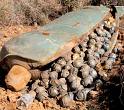
The book is entitled Unacceptable Harm: A History of How the Treaty to Ban Cluster Munitions Was Won. The cover image (see above) is of a French F.1 ‘Ogre’ submunition, with the gracious permission of the French artist and photographer Raphael Dallaporta. There are also colour plates in the middle of the book, with some great images by the Norwegian photographer Werner Anderson and others. The book also has a foreword written by Dr. Eric Prokosch, one of the pioneer researchers on cluster munitions, and author of the classic book The Technology of Killing: A Military and Political History of Anti-Personnel Weapons (1995).

Unacceptable Harm explains how the Convention on Cluster Munitions was achieved through the ‘Oslo process’, a partnership of governments, international organizations and civil society not unlike the one that resulted in the Anti-Personnel Mine Ban Convention in 1997. The book examines why it took the world so long to act on cluster munitions, why it eventually did, and what lessons banning cluster munitions might hold for future efforts on a pressing challenge of our time: protecting civilians from the effects of explosive weapons. (For further info on explosive weapons, see also Landmine Action's recent report).

The book will initially be launched in Geneva on 11 December, to be followed by events in Oslo and elsewhere in early 2010. Stay tuned to the blog for further updates.

John Borrie

Thursday, 30 July 2009

Unacceptable harm: Nearing the end of a long run …


As many of this blog’s readers know, I’ve been researching and writing a history of international efforts to address the humanitarian impacts of cluster munitions as part of a project commencing at UNIDIR in March 2008 funded by the Government of Norway.

I’m pleased to say that the total book manuscript of Unacceptable Harm: A history of how the treaty banning cluster munitions was won is now done, and is in the hands of UNIDIR’s copy editor.

Writing a manuscript of 140,000 or more words is not something I’ve done before, and as I mentioned in April (as I was plodding along the long, uphill straight of drafting the book’s eleven chapters), running it can be a bit of a difficult, lonely business:

“It’s quite tricky psychologically to keep myself properly motivated and I, for one, tend to get depressed easily about my lack of pace, especially as deadlines begin to loom. All of this, of course, against the backdrop of story of how cluster bombs were banned that’s complicated, fascinating and ultimately inspiring as an example of how the world’s less powerful states, international organizations and civil society can make a positive difference to human security – I have no real reason for complaint!”
There are still some tasks to be done, including final changes based on the book’s editing. And, I still have to chase up some of the 90 or so people I interviewed in order to check the odd thing. But the end is in sight, and UNIDIR hope to have the book available in print before the end of this year (keep following this blog for updates).

We’re winding down for a summer break here, so the Disarmament Insight blog probably won’t be updated over the course of August. Here’s hoping you all have a pleasant month, and keep reading our stuff after the height of summer.

John Borrie

Friday, 29 May 2009

On this day…change can happen !


29 May is a memorable date indeed. On this day, in 1953, two men for the first time reached the summit of Mount Everest and conquered the top of the World. Similar feelings of exhilaration and relief (and also of exhaustion) prevailed on that same day, in 2008, when 107 States adopted the Convention on Cluster Munitions (CCM) in Dublin – a treaty that outlaws virtually all cluster munitions that have been used to date, provides for assistance to victims, the clearance of contaminated land, and the destruction of existing stockpiles.

Today’s launch of the report ‘Banning Cluster Munitions – Government Policy and Practice’ marks the first anniversary of the CCM’s adoption and the beginning of the Global Week of Action on Cluster munitions. The 288 pages long report was written by Human Rights Watch (HRW) in partnership with Landmine Action and produced by Landmine Monitor. Compiled in record time, the report gives an introduction to cluster munitions, the ‘Oslo Process on Cluster Munitions’ and to the CCM itself. It provides up-to-date figures on cluster munitions use, production, stockpiling, transfer and disinvestment in cluster munitions manufacturers. And, most importantly, it documents government statements, parliamentary actions and civil society initiatives on cluster munitions in 150 States, that is, all States that took part in the ‘Oslo Process', and all States that are known to stockpile cluster munitions today.

‘Change can happen!’ exclaimed the representative of HRW at today's launch event. The report provides a historical record of how numerous States’ policies and practices on cluster munitions have changed over the course of the last few years. To date, 96 States have signed the CCM, of which 35 have at some stage in the past used, produced, stockpiled or transferred cluster munitions. And 7 States have already ratified treaty. Several more have indicated that they would deposit their instrument of ratification shortly, so that the treaty can be expected to enter into force in 2010.

Importantly, as the report notes, policy shifts also took place in States not involved in the ‘Oslo Process’. The U.S., for instance, has recently enacted a permanent ban on cluster munitions exports. Such practices also contribute to the stigmatization of cluster munitions as weapons that are unacceptable because of their negative humanitarian impacts.

The report will also serve as a baseline for the future implementation of the CCM by State Parties. Remarkably, Spain has already destroyed all of its cluster munitions stockpiles, even prior to the treaty’s entry into force. This bodes well for the effective translation of treaty obligations into concrete national implementation measures, and several other States are expected to destroy their stockpiles in the course of 2009. In support of the timely implementation of this particular treaty obligation Germany will host a Conference on the destruction of cluster munitions stockpiles in Berlin next month.

Change also happened elsewhere in Geneva today: after a decade-long struggle, the Conference on Disarmament (CD) finally adopted a Programme of Work! Some diplomats already suspect they will soon remember with fondness the days of fruitless discussions and blockage in the CD in view of the daunting negotiations that lie ahead of a treaty banning the production of fissile material for nuclear weapons - the only negotiation mandate included in the Programme of Work.

But the adoption of the CD's Programme of Work is a major breakthrough, and after an exhausting week for the Geneva disarmament community, with the Mine Ban Treaty Standing Committee Meetings and the CD going on at the same time, those diplomats who drew the short straw and had to go to the CD were rewarded this time, taking part in an historic event.


Maya Brehm

Photo Credit: Alfred Gregory, May 28, 1953 [Copyright National Geographic Society]

References: 'Banning Cluster Munitions: Government Policy and Practice' by HRW, Landmine Action et al., May 2009.

Thursday, 2 April 2009

What I talk about when I write about cluster bombs


As the world financial crisis deepens and the G-20 meet in London (and as anarchist protesters angle for a bit of argey-bargey with London’s bobbies) it was at least a lovely spring day in Geneva yesterday.

It found me holed up in my apartment fighting spring hay fever and roughly halfway through researching and writing a history of efforts to address the humanitarian impacts of cluster munitions to be published by the United Nations later this year. The history looks at the earliest efforts to place restrictions on the weapon in the 1970s, as well as the UN Convention on Certain Conventional Weapon process’s subsequent attempts to engage with addressing the proven hazards of cluster munitions to civilians. But the book’s main focus is on why and how the Oslo process unfolded (which regular readers of this blog will know I’ve followed since its origins) and what some of its lessons might be.

I find writing a rewarding but lonely and difficult business. It’s quite tricky psychologically to keep myself properly motivated and I, for one, tend to get depressed easily about my lack of pace, especially as deadlines begin to loom. All of this, of course, against the backdrop of story of how cluster bombs were banned that’s complicated, fascinating and ultimately inspiring as an example of how the world’s less powerful states, international organisations and civil society can make a positive difference to human security – I have no real reason for complaint!

In the second half of last year I decided I’d get myself into shape after a long and intense period of work on the Oslo process and my UNIDIR research. I entered to run L’Escalade, a 7.5 kilometre running race held every December in Geneva to commemorate an attack by the Duke of Savoy’s troops the Genevois repulsed in 1602. (According to Genevois legend, Catherine Cheynel, originally from Lyons and the wife of Pierre Royaume, ("Mère Royaume"), a mother of 14 children, seized a large cauldron of hot soup and poured it on the attackers. The Royaume family lived just above the La Monnaie town gate. The heavy cauldron of boiling soup landed on the head of a Savoyard attacker, killing him. The commotion that this caused also helped to rouse the townsfolk to defend the city.)

Now 7.5 km isn’t far. But I’d been travelling the two preceding weeks and only arrived back in Geneva from the Oslo signing ceremony for the Convention on Cluster Munitions the previous evening. But I did run l’Escalade despite the dark, the freezing temperature and it being my first-ever running race (being jostled by a thousand bony elbows took a bit of getting used to). I even ran a respectable time (for me!) and managed to overtake some of those sets of sharp elbows later in the run.

In retrospect I think it was good mental preparation for tackling a book – since with researching and writing like this you certainly have to take a long-view and pace yourself, but keep going whatever happens.

At the moment I’m reading a memoir by the Japanese writer Haruki Murakami, What I Talk About When I Talk About Running. He’s one of my favourite novelists, and a lot of what he says in the book strikes a chord with me. I loved this passage:

“No matter how much long-distance running might suit me, of course there are days when I feel kind of lethargic and don’t want to run. Actually, it happens a lot. On days like that, I try to think of all kinds of plausible excuses to shake it off. Once, I interviewed the Olympic runner Toshihiko Seko, just after he retired from running and became manager of the S&B company team. I asked him, “Does a runner at your level ever feel like you’d rather not run today, like you don’t want to run and would rather just sleep in? He stared at me and then, in a voice that made it abundantly clear how stupid he thought the question was, replied, “Of course. All the time!”

Now that I look back on it I can see what a dumb question that was. I guess even back then I knew how dumb it was, but I suppose I wanted to hear the answer directly from someone of Seko’s calibre. I wanted to know whether, despite being worlds apart in terms of strength, the amount we exercise, and motivation, when we lace up our running shoes early in the morning we feel exactly the same way. Seko’s reply at the time came as a great relief. In the final analysis we’re all the same, I thought.”
Moreover, for Murakami, the motivation to write, just like his motivation to run at least a marathon every year, has to be a sense of accomplishment rather than competition with others:
“What’s crucial is whether your writing attains the standards you’ve set for yourself. Failure to reach that bar is not something you can easily explain away. When it comes to other people you can always come up with a reasonable explanation, but you can’t fool yourself. In this sense, writing novels and running full marathons are very much alike.”
I’m neither a novelist nor do I have much inclination at the moment to train for a full marathon.
But I did feel a sense of accomplishment after completing L’Escalade – however modest the objective; one similar to the feeling I get when I finish a piece of decent research. The feeling doesn’t last long, and it always just gets me thinking about what’s next, but for a short while it’s tangible.

I guess time will tell how apt Murakami’s advice is in the context of me getting my manuscript finished by deadline. But it did at least encourage me to gulp down some hayfever medicine and go for a decent run next to the lake yesterday evening as a break from my own historical marathon.

John Borrie

Photo ('Run like hell!!!) of a Baku roadsign by 'Today is a good day' retrieved from Flickr.

Thursday, 26 March 2009

A step towards a U.S. cluster munitions ban?


On March 11, U.S. President Obama signed the Omnibus Appropriations Act for fiscal year 2009. Some have called this piece of legislation a ‘major turnaround in U.S. arms policy’. It contains the following passage:

No military assistance shall be furnished for cluster munitions, no defense export license for cluster munitions may be issued, and no cluster munitions or cluster munitions technology shall be sold or transferred, unless
(1) the submunitions of the cluster munitions have a 99 percent or higher functioning
rate; and
(2) the agreement applicable to the assistance, transfer, or sale of the cluster munitions or cluster munitions technology specifies that the cluster munitions will only be used against clearly defined military targets and will not be used where civilians are known to be present.
A similar restriction on the export of cluster munitions was first introduced in the 2008 Consolidated Appropriations Act in December 2007. Compared to the 2008 Act, this year’s law represents advancement, but some of its wording calls for further clarification. Questions arise in particular regarding the ‘agreements’ concluded with the recipients of US cluster munition exports. These agreements usually not being public, how will recipients’ compliance be assessed and how will they be held accountable if they do not respect the terms of the agreement?

As to the content of these agreements, what is meant by ‘clearly defined military targets’, for instance? Will recipients be held to the generally accepted standards on the conduct of hostilities and the definition of a ‘military objective’ contained in Additional Protocol I to the 1949 Geneva Conventions - a treaty that the U.S. has never ratified? Further, the phrase ‘where civilians are known to be present’ raises questions about the level of knowledge that is required at any time during and preceding an attack. Will it for instance be in order to use cluster munitions where civilians are possibly or probably present? What measures does the attacker have to take to ascertain whether there are civilians in the area? And if there are civilians, can the attacker assume that they are no longer present after they have been warned of an impending attack?

Apart from these open questions, the 2009 Act introduces a more restrictive export policy, notably due to the reformulation of the 1% failure rate criterion. Whereas in 2008, cluster munitions had to have a ‘99 percent or higher tested rate’ to be exportable, now, they have to have a ‘99 percent or higher functioning rate’. The term ‘functioning rate’ was already used in the Cluster Munitions Civilian Protection Act (a bill aimed at limiting the use, sale, and transfer of cluster munitions) that was introduced by Senators Feinstein and Leahy in February 2007 (and which was stalled in the various Committees of the Senate and House of Representatives). The 99 % functionning rate criterion limits exportable cluster munitions to those that in actual combat situations produce no more than 1% duds, as opposed to the failure rates measured under the ideal conditions of a test. But how the ‘functioning rate’ of a cluster munition will exactly be determined and by whom remains to be seen.

Interestingly, the cluster munitions policy presented by Secretary of Defence’s Gates in June 2008 contains yet another formulation of the 1% failure rate criterion. It refers to:
cluster munitions containing submunitions that, after arming, do not result in more than 1% unexploded ordnance (UXO) across the range of intended operational environments
The U.S. delegation introduced similar wording into the text that the Convention on Certain Conventional Weapons’ (CCW) Group of Governmental Experts (GGE) is discussing in Geneva. And the 2009 bill for a Cluster Munitions Civilian Protection Act introduced in the U.S. Senate on February 11 this year also uses the phrase ‘range of intended operational environments’. This formulation of the reliability criterion suggests that the failure rate is calculated on the basis of instances of cluster munitions use in different terrains and weather conditions. It does beg the question, however, what ‘unintended operational environments’ are.
Another part of the phrase also gives rise to concern. In fact, it seems to address only those submunitions (or depending on the reading, cluster munitions) that, after arming, do not result in more than 1% dud rate. This would mean that submunitions that for various reasons fail to arm during descent (respectively, those cluster munitions that fail to disperse their load) do not enter the 1% calculus. However, unarmed submunitions (whether dispersed or not) also represent a danger to civilians. Years after their deployment, movement can cause them to arm - and detonate.

Participants in the Oslo Process on Cluster Munitions that led to the successful adoption of the Convention on Cluster Munitions (CCM) in May last year, have recognized that the reliability of cluster munitions depends on a multitude of factors and is difficult to determine in a universally acceptable, objective way. Therefore, the CCM’s approach has been to address all the criteria that have in practice caused the unreliability and indiscriminate effects of cluster munitions. The CCW GGE, in contrast, continues to grapple with failure rates. But in practice, the U.S. 1% failure rate policy, whatever its formulation, is tantamount to a de facto export ban on ‘cluster munitions causing unacceptable harm to civilians’ because ‘only a very tiny fraction of the cluster munitions in the U.S. arsenal meet the 1-percent standard’.

The other major step towards an export ban on cluster munitions lies in the fact that the export limitation in the 2009 Appropriations Act may well be a permanent one. In difference to the export restriction of the 2008 Consolidated Appropriations Act, which was only valid for the duration of fiscal year 2008, the 2009 Act contains no such time limit. How U.S. policy on the use of cluster munitions, as opposed to their export, will shape up is still unclear. Supporters of a complete ban on cluster munitions are working toward motivating Senators to co-sponsor the recently introduced Cluster Munitions Civilian Protection Act of 2009. They hope that growing co-sponsorship of this legislation might in time encourage President Obama to join the CCM.

Maya Brehm, with thanks to Laura Chirot and Virgil Wiebe for their helpful comments.

Photo Credit: 'Go toward the light' by J.Star on Flickr.

Thursday, 29 January 2009

Reading the Tea Leaves: Obama and Cluster Bombs


What will US President Obama do about cluster bombs? The new administration announced immediate changes in some defense and national security related matters, most notably on interrogation methods and the closing of Guantanamo Bay detention center within the next year. No such quick action on cluster munitions took place, however. For clues about future action, we can look at President Obama’s voting record as a Senator, positions taken after the campaign, and the orientation of his senior and midlevel appointments in national security positions.

Obama’s Record in the Senate

In September 2006, Senator Obama voted for Senator Feinstein’s proposed amendment to the Defense Appropriations bill:

No funds appropriated or otherwise made available by this Act may be obligated or expended to acquire, utilize, sell, or transfer any cluster munition unless the rules of engagement applicable to the cluster munition ensure that the cluster munition will not be used in or near any concentrated population of civilians, whether permanent or temporary, including inhabited parts of cities or villages, camps or columns of refugees or evacuees, or camps or groups of nomads.
The amendment failed by a vote of 70-30. The proposal was certainly a modest one and came before the ban movement got traction, but that the future President was willing to take a positive stand is certainly an encouraging sign. While the focus of this blog is on the Obama administration, it should be noted that the US Congress is likely to consider similar legislation again this year.

After the Election


Following the election and on the eve of the signing of the Convention on Cluster Munitions (CCM) in Oslo, a spokesperson for the incoming President gave the following statement:
President-elect Obama is deeply concerned about the well-being of civilians in situations of conflict, as reflected by his support of the legislation in 2006 that would have prohibited the use of cluster munitions near concentrations of civilians. As president, he will carefully review the new treaty and work closely [with] other countries to ensure that the United States is doing everything feasible to promote protection of civilians in conflict.
Not a resounding endorsement of the Oslo treaty, but it holds some promise.

Do Obama’s cabinet and staff picks give us any clues?

Secretary of State Hillary Clinton voted against the September 2006 Feinstein amendment. As did Joe Biden (now the Vice President) and another cabinet member, Ken Salazar (now Secretary of the Interior). More recently, written questions about the broad principles that are likely to guide the Obama Administration’s policy review on cluster munitions were put to her as a part of Secretary of State confirmation procession in the US Senate. The written response was as follows:

The incoming Administration has not taken a position on the new cluster bomb treaty. I look forward to working with the President-elect and the rest of the national security team on this issue in order to develop a policy that upholds our moral obligations while protecting our troops. The new Administration will carefully review the treaty in consultation with military commanders and work closely with our friends and allies to ensure that the United States is doing everything feasible to promote protection of civilians - especially children.
In the words of one observer close to the process: “they punted.”

Secretary of Defense Robert Gates’ position on cluster munitions, while he was serving at the pleasure of President Bush is well known. On June 19, 2008, after the CCM had been adopted but not signed, Gates issued a new Department of Defense Policy on cluster munitions. That policy, in part, states that:

DoD recognizes that blanket elimination of cluster munitions is unacceptable due not only to negative military consequences but also due to potential negative consequences for civilians. Large-scale use of unitary weapons, as the only alternative to achieve military objectives, could result, in some cases, in unacceptable collateral damage and explosive remnants of war (ERW) issues.
President Obama decided to retain Gates as Defense Secretary. Will it be President Obama’s pleasure to change Gates’ mind?

National Security Advisor James Jones, Jr. is a retired marine who began his career as a platoon leader in Vietnam. In the late 1990s, he served as a military assistant to President Clinton’s Defense Secretary William Cohen.

It’s not clear how much he was involved in the formulation of the now abandoned Cohen policy on cluster munitions, which required all cluster munitions produced after 2005 to have a failure rate of no more than 1%.

US Ambassador to the United Nations Susan Rice was on the National Security Council (NSC) staff as Director for International Organizations and Peacekeeping and then became Special Assistant to the President and Senior Director for African Affairs during the Clinton Administration. Eventually, she moved over to the State Department as Assistant Secretary of State for African Affairs.

When the Eritrea/Ethiopia War broke out in 1998 , she was tasked with trying to negotiate a settlement. She likely remembers the carnage caused when the Eritrean air force dropped cluster bombs on Mekele, Ethiopia in the opening days of that conflict. In 1999, Rice co-wrote an op-ed piece in the International Herald Tribune castigating the conduct of the Sudanese government against its own people.

Rice is certainly no John Bolton (the former US ambassador to the UN who openly disdained the organization – he was eventually replaced by Zalmay Khalilzad), and will take a much more multilateral approach to issues. Being in New York may limit her impact on conventional arms control issues, though.

Mid Level Appointments

Deputy Secretary of Defense William Lynn has been the Senior Vice President for Government Operations and Strategy at Raytheon. Prior to that he has served in a variety of DoD positions. Raytheon manufactures various versions of the Joint Stand Off Weapon (JSOW), a “precision attack glide bomb”. Among the payloads for the JSOW are both the BLU-97 CEM bomblets (tagged as one of the “dirty dozen” cluster munitions by Human Rights Watch) and Textron’s Sensor Fuzed Weapon.

Lynn’s confirmation ran into a snag because of the new president’s ethics rules that “ban lobbyists who join his administration for two years from working on issues they were previously involved with.” Not to worry – President Obama waived that rule for Lynn.

Under Secretary of Defense for Policy Michele Flournoy, president and co-founder of the Center for a New American Security, is counted among the “counterinsurgents”. She held several positions in the Clinton administration (including Deputy Assistant Secretary of Defense for Strategy). She does not appear to have directly addressed the issue of cluster munitions, but an approach that stresses connecting with local populations would likely place a premium on reducing harm to civilians. In a piece published in October of 2008, Flournoy and Shawn Brimley called on “the new civilian leadership in the Pentagon” to “adopt an ethic of responsible stewardship.”

Department of Defense General Counsel Jeh Charles Johnson has been a partner at the DC office of the Paul Weiss law firm. Beginning in 1998, he served for 27 months as General Counsel to the Department of the Air Force. In that position he very likely had to consider the legality of the use of cluster munitions, as the weapon was used extensively by the USAF in the Kosovo campaign. Johnson is certainly a change from William Haynes III, his predecessor, who has been seen as one of the most aggressive defenders of the Bush era interrogation policies.

Deputy Secretary of State for Policy Jim Steinberg served as Deputy National Security Advisor under Clinton from 1996 to 2000, covering the time of the Kosovo campaign. He held other positions in the State Department and served as Director of Foreign Policy Studies at the Brooking Institution. Along with Kurt Campbell, Steinberg recently launched a book entitled Difficult Transitions: Foreign Policy Troubles at the Outset of Presidential Power in which they caution against quick changes in policy, but also the need to consult with allies.

So, what does all this reading of the tea leaves tell us?

Unlike the immediate decisions to reverse Bush administration policies on torture and the Guantanamo Bay Detention Center, no such quick turnaround in policy will likely result on cluster munitions unless there is considerable pressure to do so. That said, there is a general sense of “out with the old and in with the new.” The new administration is committed to multilateralism and listening in a way not usually associated with the Bush administration, so there is room for strong NATO proponents of the CCM to make an impact. The decision makers discussed above at least on the surface appear to have a greater respect for the opinions of their military counterparts. If US allies who are supporters of the Oslo Treaty are to have a positive impact, they will need to be working at convincing not only civilians in the new administration, but also their US military colleagues.


This is a guest blog by Virgil Wiebe, Director of Clinical Education and Associate Professor at the University of St. Thomas School of Law, Minneapolis.

Photo: ‘Paragon Fortune Telling Teacup’ by Beads by Laura on Flickr.

Sunday, 18 January 2009

2009: Learn, adapt, succeed report now out...

Well, we're back for the New Year, and we hope all of our readers had happy holidays.

In November last year, we convened a two-day symposium as part of the Disarmament Insight initiative in Glion, Switzerland, entitled Learn, Adapt, Succeed: Potential Lessons from the Ottawa and Oslo Processes for other disarmament and arms control challenges, which brought together more than thirty individuals from invited governments, United Nations agencies, the International Committee of the Red Cross and representatives of civil society.

My quick post about the DI symposium in late-ish November before grabbing my bag for a couple of weeks of travel to the UK, and to Oslo for the Convention on Cluster Munitions signing ceremony, didn't go into much detail about the discussions in Glion. So I'm pleased to say that a summary report of the meeting can now be downloaded in PDF format from the 'Disarmament as Humanitarian Action' project page on UNIDIR's website by following this link. (Click on the 'DI Glion seminar report' link to Open, or right-click to see the Save option, on most computers.)

The symposium was conducted according to the Chatham House Rule, which means that we didn't identify individual speakers or affiliations there. But we hope that the report conveys a sense of what was a very thought-provoking and positive discussion on a range of human security related themes and processes - involving, for instance, ongoing efforts to curb the illicit trade in small arms and light weapons, the Arms Trade Treaty, the Geneva Declaration on Armed Violence and Development and, of course, the CCW and new CCM.

This week a certain North American country will inaugurate a new President. His campaign catchphrase - "We can do it" - is already gently lampooned, even among his many supporters. Maybe, along with renewed sense of hope, there is a gnawing collective sense that no person can live it up to such expectations, especially in a country with so varied and even conflicting interests, and the massive challenges before it.

Well, maybe so. But the slogan isn't a bad one: the Ottawa and Oslo processes on anti-personnel mines and cluster munitions respectively, and to some extent progress in other arms control domains like implementing the UN Programme of Action on small arms, do show that positive change and progress on human security objectives is possible at the multilateral level, even in a pretty unpromising political environment over the last few years. It'll be interesting to see to what extent that improves with the new guy.

John Borrie

Picture by John Borrie.

Wednesday, 3 December 2008

Wish You Were Here: Banning the (Cluster) Bomb, 1958-2008


The Philippine Campaign to Ban Landmines (PCBL) designed the postcard above for the Dublin Diplomatic Conference on Cluster Munitions in May this year. The postcard was distributed to participants there with a message to support a cluster munitions ban treaty this year, and also commemorates the 50th anniversary of the Campaign for Nuclear Disarmament (CND) and its Ban-the-Bomb symbol – a symbol that later became the more broadly meaningful Peace Symbol.

It’s timely to bring this up again on the occasion of the Oslo Signing Conference for the new Convention on Cluster Munitions (CCM), which comprehensively bans them as a class of weapons, and which commenced on Wednesday. When we made the postcard before the Dublin Conference, achieving such a comprehensive ban treaty wasn’t yet certain. After the successful treaty negotiations at Dublin, the treaty is now about to become a reality in international law.

Through the main motifs in black and yellow orange on the front of our postcard, we wanted to show the continuing a link, from left to right, between the oldest (A-bomb) and the newest (cluster) bomb ban advocacies between 1958 and 2008. It reflects a historical continuum of 50 years of bomb banning and peace advocacy, as well as an element of solidarity with and outreach to other generations and causes in peace activism, especially those who have advocated nuclear disarmament.

The postcard was meant to recall and honour those who were generations ahead of the current Cluster Munition Coalition (CMC) and paved the way for humanitarian disarmament campaigning.

The cluster bomb motif provided by CMC also indicates, aside from a cluster bomb itself, a victim’s hand and upper arm as if signaling “Stop!” or “No!”. That seems simple enough. That wasn’t the case though with the peace symbol originally designed by British anti-war activist-artist Gerald Holtom in 1958 for an Easter weekend protest march to an A-bomb research facility in Aldermaston in England. In his own words explaining it 15 years later in 1973:

“I was in despair. I drew myself: the representative of an individual in despair, with hands palm outstretched outwards in the manner of Goya’s peasant before the firing squad. I formalized the drawing into a line and put a circle round it….”
In Holtom’s original design, the lines were not so cleanly straight as they have been in more recent years (as adopted in our postcard), but instead were curved outward on both sides of the lines where the hands palm outstretched, the head and feet of the despairing figure were supposed to be.

Almost as an afterthought, Holtom also saw that the symbol represented a composite of the semaphore signals for the letter N (someone holding a flag in each hand stretched outwards and downwards) and D (a single flag held vertically above the head) – thus Nuclear Disarmament. So, in those earlier years in Britain, it was known more as the “disarmament symbol,” “ND symbol,” or “CND symbol.” Holtom himself was said to have regretted the connotation of despair and wanted the sign inverted to instead connote something more like hope, resurrection or elation. Also, the inverted image of a figure with arms stretched upwards and outwards represented the semaphore signal for U – Unilateral, as in unilateral action as the key to nuclear disarmament. But the original symbol is what stuck and caught on.

Bayard Rustin, an American activist in the 1958 march, took the symbol back to the U.S., where it eventually became the Peace Symbol globally. From a symbol of despair, it came to acquire near universal significance as a symbol of peace and protest, especially of the anti-war sort.

At the back of our postcard pictured above, we indicated in upper left the occasion and venue: “DUBLIN DIPLOMATIC CONFERENCE ON CLUSTER MUNITIONS, 19-30 May 2008, Croak Park, Dublin, IRELAND” with the Irish shamrock symbol to its immediate right. (We misspelled the name of historic Croke Park.) Because the venue was Ireland, we wanted to use the Irish colour green for this text, but decided to stick with black to economize on production costs.

And so that text and the Irish shamrock at the back of our postcard came out in black. When we showed the postcard to Irish peace activist friend Clem McCartney and his Chilean anti-war activist partner Roberta Bacic on meeting up with them in Dublin outside the conference, surprisingly they commended us for its “black shamrock,” – which we learned from them is an Irish symbol of mourning and resistance. Huh, PCBL had inadvertently used an Irish protest symbol?

And so – perhaps like Holtom – our postcard was loaded with anti-war symbols to a greater extent than we had originally intended. In fact, toward the end of the Dublin conference we actually came across that “Black Shamrock” symbol again on the T-shirt of an Irish anti-war activist who participated in a side event to the conference, a Public Talk on “Achieving a Cluster Munitions Ban: Blueprint for an Ethical Foreign Policy?” with former Irish Assistant Secretary General Denis Halliday, sponsored by Action from Ireland (Afri).

At the end of the conference I chanced upon Finnish campaigner Jan Koskimies of the Peace Union of Finland/Committee of 100. He was wearing on his lapel a Peace Symbol pin of Holtom’s original design. Seizing the moment, I asked Jan if I could buy (yes, buy) his pin. He said, no, he would give it to me since there were many more of them back where it came from in his organization. It turns out that the Committee of 100 was the more widely known successor to the Direct Action Committee Against Nuclear War (DAC), which had planned the 1958 Easter weekend protest march to Aldermaston. To somehow return the favour, I could only give Jan our postcard – maybe not the fairest exchange.

Exchange? Yes, let’s learn the lessons from each other’s campaigning histories and so connect the dots between arms control, disarmament, humanitarian law, human rights, and peace. Let’s invoke the spirit of the best in humanitarian disarmament and peace campaigning. And we may yet develop a new, more interlinked and holistic, humanitarian disarmament network.

This is a guest blog by Sol Santos. Sol is Coordinator of the Philippine Campaign to Ban Landmines. Image courtesy of Kara M. Santos.

CCM: And the signing count is ...

At close-of-play of the first day of the two Signing Ceremony of the Convention on Cluster Munitions (CCM) at 6 o'clock this evening, Norwegian Foreign Minister Jonas Gahr-Store announced that, so far, 92 countries have signed the treaty.

More will follow tomorrow. Whether the treaty will hit the symbolic 100 mark then is uncertain. But irrespective of whether it does, the fact that more than 90 countries - including the most heavily cluster munition-affected states including Afghanistan, Laos and Lebanon - sends a very strong signal of international support for this new humanitarian disarmament norm.

John Borrie

Convention on Cluster Munitions: Oslo Signing


This is a very quick post from Oslo City Hall, where I'm attending the Signing Ceremony of the new Convention on Cluster Munitions (CCM), a ground-breaking humanitarian disarmament treaty agreed in negotiations in Dublin at the end of May.

The Norwegians have played a major role - both as instigators of the so-called Oslo Process, and as members of the core group - and so it's very fitting that Norway host the signing. And, although a cold day outside, there is a very warm atmosphere in the meeting hall. The ceremony was opened by Prime Minister Jens Stoltenberg and high level speeches followed from Foreign Minister Jonas Gahr-Store, International Committee of the Red Cross President Jakob Kellenberger, the United Nations and several Ministers of various governments including two key cluster munition affected states, Laos and Lebanon, set an upbeat tone.

Two of the most powerful statements were from the Cluster Munition Coalition (CMC), the civil society consortium that has worked in partnership with governments, the UN and ICRC to achieve the CCM. CMC coordinator Thomas Nash and spokesperson and Ban Advocate and cluster munition survivor Branislav Kapetanovic (pictured) each spoke movingly of the campaign's journey from voice in the wilderness to treaty, and Branislav also related some of his own experiences and the challenges of living as a survivor.

Signing of the treaty has already begun as I write this, and Ireland, Norway, Sierra Leone and the Holy See have indicated that they are also in a position to ratify the treaty straight away. It's unclear yet how many countries will sign the CCM in Oslo, but it should be at least in the high 80s. It's not inconceivable that the symbolic number of 100 is reached, but since very specific requirements have to be met in terms of letters of legal powers for delegations to be allowed to sign, there will be inevitable hiccups that might prevent that. We'll see, but it's great to be here to see after such a huge amount of effort over recent years.

John Borrie

Picture of Branislav Kapetanovic and Thomas Nash (CMC) by John Borrie.

Wednesday, 5 November 2008

CCW: Update on 5th cluster munition GGE

Half-way through the latest and last week of the 2008 work of the UN Convention on Certain Conventional Weapons (CCW)'s group of experts, how are things shaping up in light of a new Chair's text released last Friday? (See our preceding blog post.)

Frankly, it is too soon to say. Reaction has been mixed. While welcoming Ambassador Bent Wigotski of Denmark's paper, some delegations complained on Monday that they had only just received it, and then only in English and not all of the official UN languages - too soon to have properly considered it and have received instructions from authorities in their home countries.

Delegations also pointed to a range of specific problems the contents in the paper pose for them, especially concerning the scope and strength of its core obligations, how cluster munitions are defined, on transfer restrictions, transition periods and the deferral of its obligations. These concerns have been expressed from both ends of the political continuum - not only from those states concerned that a protocol may conflict or undermine the Convention on Cluster Munitions agreed in Dublin in May, but from some cluster munition users and producers who shunned the Oslo Process. The U.S. delegation has said clearly that it wants a protocol achieved this session, or it would seem to some before the next administration formally takes over in Washington D.C. in January (for current U.S. policy see the Pentagon's June cluster munition news release). But Russia, Israel and Brazil have questioned several parts of the Chair's paper on the conference floor, echoed on some points by others such as China and India.

After a languid summer session in July, in which many expert sessions finished early as delegations could not seem to fill the time, and an, at times, testy further week of talks in September, the Chair is now cracking the whip: there is only the rest of this week left to stand a hope of achieving agreement on his take on a protocol in 2008. Consequently, he has been consulting furiously by means of bilaterals to try to establish whether a consensus actually exists, and whether and how these differ from the signals that delegations are sending on the conference floor. (We don't know what he is being told in those private meetings, and how much this differs from what is being said in the big room.) Meanwhile, Ambassador Wigotski's Friends of the Chair are taking the expert group through issues such as definitions in the hope of whittling away differences, but this is slow and so far with mixed results.

Going into this meeting, I thought the most likely outcome for the CCW expert group's talks on cluster munitions this year would be a continuation of the mandate to work to 'negotiate a proposal' in 2009 in view of the differences of opinion apparent on many substantive issues and the amount of convergence still needed. Even if not having achieved a protocol per se, the Chair could then justifiably claim to have advanced the CCW's work in this area.

The Chair, however, signaled very directly this week that he wants a protocol based on his text to be agreed, if not by the end of this week, then in time for the CCW's annual meeting of states in the second half of next week. His single-minded determination is not without risk - trying to force an agreement could, of course, see the work fail.

But he might also succeed. In any case, I would agree with the International Committee of the Red Cross, which observed this week that the basic criterion for an agreement of value is not, as a few states have argued, primarily whether it has all of the big users and producers of cluster munitions involved. (Comment: the structure of the CCW framework convention means such states could agree to a protocol without any intention of joining anyway, and its transition period and deferral obligation options as drafted are extremely generous, to the point where most of its obligations don't have to be implemented for years or even decades.) The value of any agreement is rather in terms of what difference it makes on the ground in reducing the humanitarian impacts of cluster munitions. Otherwise, a CCW protocol on cluster munitions could simply act as a fig leaf for business as usual concerning use of a weapon of particular and proven hazard to civilians. What will transpire remains to be seen.

Watch this space for further updates.


John Borrie

Friday, 31 October 2008

CCW: Hark, a new Chairman's text


In our post of 24 October ('A Global Year of Cluster Munitions') we noted that preparations are underway for the fifth round of expert talks as part of the UN Convention on Certain Conventional Weapons' attempts to "negotiate a proposal" on cluster munitions. One element impatiently awaited was a new text by the Chairman of the group of experts, Ambassador Bent Wigotski of Denmark, containing his take of a possible draft protocol.

At an informal consultation earlier this week, and having just arrived that morning from UN 1st Committee in New York, Ambassador Wigotski told those present that despite delays, he would bring out a new text before the end of the week. And so he has. As of earlier today this text could be downloaded from the webpage of the UN Office for Disarmament Affairs in Geneva.

A key Article in this Chairman's text - as he highlighted at his informal consultation - is Article 4, which contains general prohibitions and restrictions on cluster munitions. These were always likely to be less comprehensive or far-reaching than those of Article 2 of the Convention on Cluster Munitions (CCM) agreed in Dublin, Ireland on 30 May in view of the CCW's membership (including some big cluster munition user and producers who shunned the Oslo Process). The formulation of these provisions became a key point of difference at the preceding sessions of the Group of Governmental Experts (GGE) this year.

The newest version of Article 4 in the Chairman’s text is as follows:

"Article 4. General prohibitions and restrictions

1. It is prohibited for a High Contracting Party to use, develop, produce, transfer or otherwise acquire cluster munitions that do not meet the criteria in paragraph 2.

2. The prohibition in paragraph 1 shall not apply if:

(a) The cluster munition is capable of being directed to a pre-defined target area and each explosive submunition possesses one or more of the following safeguards that must effectively ensure that unexploded submunitions will no longer function as explosive submunitions:

(i) a self-destruct mechanism;
(ii) a self-neutralization mechanism;
(iii) a self-deactivating feature; or
(iv) two or more fuzing features.


or

(b) The cluster munition is capable of being directed to a pre-defined target area and incorporates a mechanism or design which, after dispersal, results in no more than 1% unexploded ordnance across the range of operational environments.

3. A High Contracting Party may defer compliance with Paragraph 1 of this Article for a transition period not exceeding [8/10/12/15] years from the Protocol’s entry into force for it. This deferral shall be announced by declaration at the time of its notification to be bound by this Protocol. In case a High Contracting Party is unable to comply with paragraph 1 of this Article within this [8/10/12/15] year period, it may notify a Conference of the High Contracting Parties that, with the exception of transfers, it will extend this period of deferred compliance for a period of up to [5] additional years.

4. Notwithstanding a High Contracting Party’s deferral, pursuant to paragraph 3, of the application of the provisions of paragraph 1, each High Contracting Party undertakes, immediately upon entry into force:

(a) Not to develop new cluster munitions which do not meet the requirements of paragraph 1;

(b) To use cluster munitions that do not meet the criteria in paragraph 1 only after approval by its highest-ranking operational commander in the area of operations;

(c) To take steps in any design, procurement, or production of cluster munitions to minimize the unexploded ordnance rate or incorporate additional safeguard mechanisms or designs;

(d) To improve, to the extent possible the accuracy of their cluster munitions;

(e) To endeavour to use only cluster munitions with the lowest possible unexploded ordnance rate, consistent with military requirements; and

(f) To complete an evaluation of the military requirements and remove the stocks of cluster munitions in excess of these requirements from active inventory as soon as possible and designate these stocks for destruction.

5. The obligations in this Article do not apply to cluster munitions acquired or retained in a limited number for the exclusive purpose of training in detection, clearance, and destruction techniques, or for the development of cluster munitions countermeasures.

6. The High Contracting Parties in a position to do so are encouraged, through bilateral or multilateral mechanisms established between them, to facilitate the exchange of equipment, material, and scientific and technological information that will lessen the humanitarian impact of cluster munitions."

We have only had a preliminary look at the new text. While we commend the Chairman for his efforts in drafting a text that he hopes might be adopted by consensus as a new protocol to the CCW, we are nevertheless slightly bewildered at the formulation of Article 4. The key question in our minds is: Will this version move the different poles of opinion within the CCW on the nature of core prohibitions closer together?

For instance, we were struck by the absence of previously included provisions, such as cumulative criteria that weapons would have to fulfill in order to be allowed (similar to Article 2 of the CCM), or a requirement that all submunitions be capable of engaging single point-targets. The brackets around the concept of a transition period have now been removed. Accordingly, a state party may defer application of article 4(1) for 8,10,12 or even 15 years, and even extend that period by another [5] years, if the concerned state feels it is unable to comply. Next week’s discussions at the CCW are going to be very interesting.


John Borrie and Maya Brehm


Photo Credit: 'le ring' by sgoralnick on Flickr.

Wednesday, 22 October 2008

High tech [cluster] munitions: more lingering questions


This is the last of four blogs addressing issues raised by Loren Thompson of the Lexington Institute about the Convention on Cluster Munitions (CCM). In last week’s blog, I raised some of the lingering concerns about Sensor Fuzed Weapons in general, and the BLU-108 in particular. Thompson had hailed the weapon as a humanitarian fix to outdated wide area cluster munitions, and complained that the CCM had banned it while other hi-tech weapons had been protected. [The brackets in the blog title make sense to those aware of the fact that under the CCM, weapons that are defined as cluster munitions are banned. Some high tech munitions with submunitions therefore are not “cluster munitions” under the CCM]. Thompson seems unaware of doubts raised about how well these weapons will work, whether banned by the CCM or not.

In last week’s blog, I also referenced critique of SFW technology by clearance specialist Rae McGrath. For readers interested in following up directly with McGrath, he’s informed me that he would welcome your questions (rae.mcgrath@hi-uk.org). The blog also prompted a cordial invitation from folks at Textron, the makers of the BLU-108, to meet with them to discuss their perspective, which I hope to be able to do.

Why size and numbers matter

It must be said that McGrath also criticized other sensor fuzed weapons like the German Smart 155 and the French BONUS systems. And those systems did have defenders in the Dublin CCM negotiations. CCM negotiators treated them as different from the BLU-108 based on numbers AND size – the logic being that the greater number of BLU-108 submunitions and their small size increase their potential for humanitarian harm.

Greater numbers of submunitions makes for more potential bits of unexploded ordnance around to cause trouble. The size of submunitions has long been a humanitarian concern – the smaller the size, the more easily greater numbers can be packed into munitions. Smaller submunitions are also harder to see (and thus avoid) and there is anecdotal evidence their miniaturized innards (especially if mechanical) make them less reliable. Ironically, smaller submunitions, when they are seen, have been “attractive nuisances” – children around the world pick them up to use as toys.

During the negotiations of the CCM in Dublin, the “[International Committee of the Red Cross] supported the inclusion of weight restrictions as a further safeguard that could assist in preventing the miniaturization of submunitions and in ‘future proofing’ the Treaty.”

Just How Smart Are They?

Another unanswered question raised by McGrath in Dublin that many have been asking: What’s to stop Sensor Fuzed Weapons (SFWs) from actively targeting non-combatant vehicles like buses or ambulances or trucks that present a better profile target? Allowing machines to make the final decision about what target should be destroyed raises fundamental questions about the humanitarian law principle of distinguishing between military objectives and civilian objects. (Paul Marks, "Planned cluster bomb hunts targets down", New Scientist, September 27, 2008, p. 26.)

U.S. Policy Caught Between Rock and Hard Place

Thompson sees in the SFW BLU-108 a humanitarian alternative to outdated wide area cluster munitions. Even assuming the BLU-108 submunitions (and weapons using SFW technology that were NOT banned by the CCM) live up to their promise, they are designed to hit point targets over wide areas. Even assuming it can do that job, these SFWs do not address the whole range of other situations the U.S. Department of Defense outlines in its June 2008 policy for which old fashioned cluster munitions might be used:

There remains a military requirement to engage area targets that include massed formations of enemy forces, individual targets dispersed over a defined area, targets whose precise locations are not know, and time-sensitive or moving targets.
In most, if not all, of these situations, the U.S. may be expected to use old order cluster munitions. And this, although the U.S. delegation to the CCW GGE admitted in Geneva in September 2008 (see the post on this blog of September 5, 2008) that the vast majority of its cluster munitions would not meet the 1% standard proposed as one of the options in the CCW process. Nevertheless, the U.S. Department of Defense June 2008 policy says it must be able to use and transfer old-fashioned cluster munitions, albeit under some restrictions, for at least another ten years. That argument for transition periods never got traction in the CCM negotiations for humanitarian reasons. Neither should it in Geneva.

Virgil Wiebe

Photo downloaded from Flickr: 'Absolute faith in technology', from larrylorca's photostream.

Friday, 17 October 2008

Hi-Tech Cluster Munitions: Lingering Humanitarian Questions

This is the second to last of four blogs addressing issues raised by Loren Thompson of the Lexington Institute. While recognizing the dangers to children posed by old order cluster munitions, Thompson bemoans the fact that the United States' Sensor Fuzed Weapon (SFW) will be banned by the Convention on Cluster Munitions (CCM). Echoing the claims of Textron, the manufacturer of the SFW, Thompson posits that the SFW harms children less because using it to attack point targets is better than using outdated cluster munitions. Thompson takes those claims at face value, and seems unaware that SFW performance has been called into question. He also complains that the Europeans protected their hi-tech weapons, but not those of the U.S.
In this post and the next, I will address these points.

Humanitarian Parameters on Technical Fixes: What did the CCM do and why?

As has been reported on this blog over the course of the Oslo process, the hardest nut for the CCM negotiators to crack was how to define cluster munitions that cause “unacceptable harm to civilians.” The problem is dealt with in the CCM by excluding certain weapons that “avoid indiscriminate area effects and the risks posed by unexploded submunitions” from the definition of cluster munitions. These “smart” weapons are not cluster munitions under the CCM and therefore are not banned, so long as they have all of the following characteristics:

(i) Each munition contains fewer than ten explosive submunitions;
(ii) Each
explosive submunition weighs more than four kilograms;
(iii) Each explosive
submunition is designed to detect and engage a single target object;
(iv)
Each explosive submunition is equipped with an electronic self-destruction
mechanism;
(v) Each explosive submunition is equipped with an electronic
self-deactivating feature;
Each required characteristic responds to attributes that have made current submunitions indiscriminate and a danger to civilians. The scattering of huge numbers of small submunitions each incapable of engaging single targets creates hazards to civilians encountered in the field. Technical fixes involving mechanical (as opposed to electronic) self-destruction and self-deactivation features – like those in some variants of the M85 used in the 2006 Southern Lebanon conflict (see our last post) - have failed to meet expectations.

If a system that meets those technical requirements still results in unacceptable humanitarian harm, it arguably would still be banned under the CCM notwithstanding all of its bells and whistles.

Healthy Skepticism about Technical Solutions

Why is the CCM definition so stringent? Simply put, past claims made by militaries and munitions manufacturers have often turned out not to be true.

Example 1: In his history of anti-personnel weapons, The Technology of Killing (1995), Eric Prokosch relates how, in the mid-70s, a British military expert told government delegates at an international conference that banning cluster munitions was unnecessary. Why? Because the newly developed (British) BL-755 cluster munition had not only a very tightly defined “footprint,” but also such reliable fuzes on its bomblets that no duds would be left behind. It turns out that the footprint was up to a hundred times larger than claimed and the failure rate in the area of at least 10-12 percent, according to UN and British estimates.

Example 2: In December 2001, the Swiss government proposed to members of the UN Convention on Certain Conventional Weapons (CCW) that future production of submunitions would have to include a fuze mechanism ensuring the deactivation and self-destruction of all explosives to at least a 98% standard. Switzerland was perhaps convinced that its newly designed submunition would surpass that standard. What was that submunition? An M-85 variant. Yet two M-85 variants were found wanting when used in Iraq and Lebanon, as detailed in a report that rocked the Vienna CCM conference last year. Rather than a 1% failure rate, on average every tenth bomblet failed to explode on impact.

How the U.S. Arsenal Failed to Smarten up

Thompson claims that all cluster bombs in the U.S. arsenal would become illegal. To begin with, there are precious few weapons with “smart” submunitions in the U.S. inventory because programs failed to meet production standards. One example is the Sense and Destroy Armor (SADARM) 155mm smart artillery munition with individually targetable submunitions. While some prototypes did enter service and were used in the Iraq War in 2003, Congress had cancelled the program in 2001 after SADARM fell “just short of meeting its 80 percent submunition reliability requirement.” (Neil Baumgardner, “3rd Infantry Division Commander Praises C2V, Communications During OIF,” Defense Daily, May 16, 2003.)

What about the BLU-108 and its Skeets? Thompson focuses on what sounds like the U.S. BLU-108 Sensor Fuzed Weapon and its “smart” skeet submunitions, a “smart” weapon that remains in the U.S. arsenal. He is correct to say that it will be banned under the CCM - because of numbers (40 submunitions per SFW) and size (each submunition weighs less than 4kg).

Thompson’s description of the system is remarkably similar to that of the manufacturer. If the system works as claimed, a carrier munition deploys ten subunit “posts”, each in turn containing four explosive “skeet” submunitions designed to seek out and destroy individual targets.
Submunitions that don’t find a target reportedly either self-destruct or self-deactivate.

But why didn’t the BLU-108 SFW survive in the CCM negotiations in Dublin? Diplomats there heard from Rae McGrath, an experienced deminer, about failures of the SFW to live up to the claims of the manufacturer when deployed in Iraq. Among his observations were the following:


This research . . . raises a number of serious questions regarding the reliability of BLU-108, especially when measured against claims made for the weapon by manufacturers, specifically as follows:

- 99% reliability: While it has not been possible to calculate a percentage reliability without full details of the number of weapons actually deployed in the Mosul area, it is clear from the clearance team’s overview and generally available figures for use of BLU108 during Operation Iraqi Freedom that the percentage of submunitions which have failed is higher than 1%. Perhaps substantially so.

- No Hazardous UXO: It seems probable that manufacturers and users would claim that the failed submunitions had self-neutralised and were therefore non-hazardous. However, given that many of the submunitions appear to have failed to operate as designed this is not a safe assumption. At best, these unexploded submunitions would deny access to land for civilian communities until cleared.
McGrath provided multiple photos of SFWs where “failures have occurred at different times in the deployment cycle.” The photos bear a look. There are for instance submunitions still attached to the “posts” (suggesting complete failure of the munitions); others lay scattered about on the ground. He also noted that the copper in unexploded submunitions make them prime targets for scavengers.

At the July 2008 CCW Group of Governmental Experts meeting in Geneva, Textron made its own presentation, likely because it saw the market for its weapon suddenly start to shrink with the impending signature and ratification of the CCM. (The Textron presentation was shown but not made publicly available.) Textron stated that a mine clearance specialist in Iraq had shot at an unexploded skeet submunition and that it had failed to detonate.

In communications with McGrath since then, he has raised some additional concerns with me. Firing at such weapons is not a controlled means of destroying them, as it may put them in an even more sensitive state if they survive the high velocity round. Ironically, the option of firing a bullet at the SFW submunition is a method sometimes used with the old fashioned and highly unstable BLU-97B, the submunition this SFW is intended to replace. Shooting at cylindrical unexploded submunitions causes them to tumble. This makes them potentially more unstable and also could turn them on their sides (most of the time they land face down). The shaped charge that makes them so devastating against tank armor could therefore travel up to a kilometer if detonated, rather than firing down into the ground.

When the subunit “posts” entirely fail to eject their four submunitions, they present a tempting target for the hacksaws and hammers of scavengers – tools that might well detonate the weapon. In sum, humanitarian concerns remain about the BLU-108.


Virgil Wiebe.