


This week's Group of Governmental Expert (GGE) meeting of the Convention on Certain Conventional Weapons (CCW) continues. Not an exciting header for a posting, I know. But then so far it hasn't been a terribly eventful meeting - especially for those of us who heard many of the presentations being delivered there two months ago in Montreux at the International Committee of the Red Cross expert meeting on cluster munitions.
This doesn't mean the GGE hasn't been without interest. Earlier this week I suggested that it might reveal indications about the intent of various players on how or whether to move ahead on addressing the humanitarian problems cluster munitions pose in the CCW. This is something that has potential implications for the so-called "Oslo Process" (see previous posts), which is proceeding in parallel and with many CCW members participating in it.
On Monday afternoon, Reuters reported that the U.S. head of delegation to this week's GGE told journalists in Geneva, "The United States supports launching negotiations on a global treaty to reduce civilian casualties from cluster bombs, but does not back a ban on the weapons". The U.S. said any negotiations would need to be in the CCW.
Curiously, the U.S. has - so far - not mentioned this in the GGE, let alone introduce a specific proposal, although it has spoken at length on other matters related to cluster munitions. Also, the Reuters report lacked details about what a U.S. proposal negotiating mandate on cluster munitions, if it emerged, might contain beyond "looking at improving their reliability, accuracy and visibility".
It's possible that the U.S. is sending a signal to the European Union that it might be willing to bargain over the latter's proposal, which is already on the table, rather than launching its own. But the EU proposal appears to go considerably further than the issues mentioned by the U.S. above.
In any case, no decision can be made on a negotiating mandate until the CCW Meeting of State Parties in November. In theory, the GGE could agree to recommend to the November meeting that it start negotiations on a new treaty in the CCW in 2008. But with only a day of talks left and countries like Russia and China indicating no change to their previous opposition to a negotiation this seems unlikely (although by no means impossible).
John Borrie
References
"U.S. open to negotiations on cluster bombs but no ban", 18 June 2007, available here.
Photo retrieved from Flickr.
Thursday, 21 June 2007
Cluster munitions: CCW update
Tuesday, 19 June 2007
War and Peace and Primates…and Podcasts
 The Disarmament Insight initiative aims to encourage disarmament practitioners to think differently about human security.
In line with that aim, the Disarmament Insight initiative held its second symposium, entitled “Human Security, ‘Human Nature’ and Trust-building in Negotiations”, at Château de Bossey near Geneva on 25 May 2007.
To stimulate fresh thinking and discussion, we invited some outstanding speakers including Frans de Waal, one of the world’s foremost authorities on ape behaviour and author of books including Chimpanzee Politics (1982) and Peacemaking Among Primates (1990) and Paul Seabright, economist and author of The Company of Strangers: a Natural History of Economic Life (2004).
As usual, we recorded talks in order to put them up on the website. Today, we have the pleasure to announce the release of Frans de Waal’s presentation: “War and Peace and Primates”.
In his talk, Frans de Waal explores what multilateral practitioners can learn from our closest relatives in the animal kingdom, including the chimpanzee and the bonobo, about negotiating, the nature of conflict and reconciliation.
We hope you enjoy this truly amazing presentation. Ideas worth spreading...
Coming soon: Paul Seabright’s presentation “How have human beings tamed our warring instincts?”
Watch this space!
Aurélia Merçay
Reference
Photo retrieved from Flickr.
Monday, 18 June 2007
Cluster munitions: "I feel a disturbance in the Force ... "
 This week, experts from States Parties to the Convention on Certain Conventional Weapons (CCW) - sometimes known as the Inhumane Weapons Convention - will meet in Geneva.
The Group of Government Experts, or GGE as it's usually known, was scheduled last November, at the CCW's Review Conference. That meeting decided:
"To convene, as a matter of urgency, an intersessional meeting of governmental experts:This may all sound a bit humdrum. But while it won't make any decisions (that's the job of a one-week Meeting of States Parties in November), this week's GGE meeting will be interesting for several reasons. For instance:
To consider further the application and implementation of existing international humanitarian law to specific munitions that may cause explosive remnants of war, with particular focus on cluster munitions, including the factors affecting their reliability and their technical and design characteristics, with a view to minimizing the humanitarian impact of these munitions."
- The GGE comes less than a month after an international conference in Lima, Peru, as part of the so-called "Oslo Process" toward a treaty to prohibit cluster munitions that cause unacceptable harm to civilians (see previous blogs on this site reporting on that meeting) and a Meeting of Experts organised by the International Committee of the Red Cross in Montreux in April;
- There is a new proposal from the European Union for a negotiating mandate on cluster munitions in the CCW, which the GGE meeting will no doubt discuss (see reference below);
- As such, all eyes are on the reactions of some of the big cluster munition user states like the United States, Russia and China.
Until now, these countries haven't been keen to negotiate new legal rules on cluster munitions in the CCW. But they can't have been blind to international political momentum that's developed since a Norwegian-sponsored conference in Oslo in February that committed 46 countries to negotiation of a treaty in the CCW or outside it - a group that continues to grow in number.
It's unlikely that many states previously opposed to a negotiating mandate in the CCW have had a sudden change of heart, at least not on a mandate as envisaged in the Oslo Declaration. But, tactically, should they resist agreement of a negotiating mandate in the CCW or go along with the EU's text? Or should they try to water down such proposals or/and present one of their own? This week we may see some indications of intent.
In late February, the new UN Secretary-General, Ban Ki-moon, described the CCW and work in Oslo as "complementary and mutually reinforcing". From a humanitarian point-of-view, it could be argued that this is already borne out by the disruptive effect that Oslo has had on the CCW's previous status quo in which the humanitarian effects of cluster munitions remained relatively peripheral. It remains to be seen how things play out though, and we'll try to bring you more updates in the course of this week.
John Borrie
References
Official documents and proposals in the CCW are accessible here.
Photo retrieved from Flickr.
Friday, 15 June 2007
Putting ourselves in the shoes of our enemies
Academics, it might be argued, have the luxury of thinking outside the box in a way that isn’t open to diplomats and policy-makers. Instead, the latter have to apply worst-case thinking because there are no guarantees about the current and future intentions of potential adversaries. But ‘playing it safe’ in this way ignores the possibility that others might be arming out of fear and not malevolence. And if both sides are arming out of fear and mistrust, the result could be a vicious circle of power and security competition no one wanted.
The fundamental problem, as the British historian Herbert Butterfield pointed out over half a century ago, is that diplomats “may vividly feel the terrible fear that [they] have of the other party, but [they] cannot enter into the [others] counter-fear, or even understand why [they] should be particularly nervous”. He added that it’s ‘never possible for you to realise or remember properly that since he cannot see the inside of your mind, he can never have the same assurance of your intentions that you have’. This is the security dilemma, a key research area of the David Davies Memorial Institute of International Studies (DDMI) at the University of Wales Aberystwyth.
The security dilemma confronts all groups in a condition of anarchy (defined as the absence of a central authority) and it arises from the existential condition of uncertainty that characterises all human relations. Analysing these kinds of situation was a major focus of international relations theory during the Cold War. Far from belonging to a bygone era, however, security dilemmas require further careful study because they’re still prevalent – and very dangerous – today.
Recognising this, the DDMI held a workshop in Aberystwyth on 4 May focusing on the ‘Nuclear Security Dilemma in Northeast Asia’, gathering together a diverse bunch of diplomats, academics, and researchers. One contributor to the workshop argued that what motivated North Korea in its nuclear ambitions is ‘fear – fear of the United States, fear of China, and fear of Japan’. Others maintained that North Korea has nothing to worry about because it knows the United States and South Korea would never attack it.
But the DPRK has not been so easily reassured. Building upon Butterfield’s core contention, three decades ago Robert Jervis highlighted the psychological dynamics that blind policy-makers to recognizing how their ‘own actions could be seen as menacing and the concomitant belief that the other’s hostility can only be explained by its aggressiveness’ (see the references below). The danger is that if the White House believes the DPRK knows that the United States is not a threat, Pyongyang’s arming must indicate aggressive intent. Other possible interpretations of North Korea’s motivations abound, underlining the challenges involved in seeing security dilemmas and the full range of responses clearly.
The negative consequences of groups and individuals failing to enter into the counter-fear of others is exacerbated if decision-makers operate with benign self-images that blind them to how their actions and behaviour might be seen as threatening by others. What’s more, the converse of a benign self-image is the attribution of a malign image to the character and actions of adversaries. Ken Booth and I call this ‘ideological fundamentalism’ in our forthcoming book on the security dilemma. Governments operating with such a mindset are blinded to the possibility that the other side might have legitimate grievances and security interests.
The security dilemma facing governments with peaceful intent is whether to risk a trust-building move in a world where there can be no guarantees about the current and future intentions of others. Even if actors can enter into the counter-fear of others, they might be so fearful that acting on this will place them in a vulnerable position should their trust prove misplaced, that they feel unable to take such a risky leap of trust.
This situation seems to characterise the nuclear standoff on the Korean peninsula. Should we assume the worst about Pyongyang’s motives and intentions and prepare for a showdown before they become too strong? Or does such a path risk a terrible war - perhaps one in which nuclear weapons might be used? Given the costs and risks of such a conflict, surely the prudent course lies in trying to reassure rather than provoke the regime in Pyongyang.
Diplomats and policy-makers need to understand how their adversary might be acting out of fear (remembering that ambition is sometimes in play), including crucially, the role that their own actions may play in provoking that fear. This was the challenge thrown down by Butterfield, and it guides the DDMI’s new project on ‘Trust-Building in Nuclear Worlds’. Our workshop on 4 May was the first in a series aimed at exploring with practitioners the possibilities of exercising empathy of this kind: it remains to be seen whether decision-makers in the United States and the DPRK can make the leaps of trust that might lead eventually to the denuclearisation of the Korean Peninsula.
This is a guest blog by Professor Nicholas J. Wheeler. Professor Nicholas J. Wheeler is Director of the DDMI. You can also read a piece by Disarmament Insight contributor John Borrie on the DDMI’s website by clicking here.
References
Bleiker, R. (2005) Divided Korea: Toward a Culture of Reconciliation, Minneapolis, MN: University of Minnesota Press.
Booth, K. and N. J. Wheeler (forthcoming 2007) The Security Dilemma: Fear, Cooperation and Trust in World Politics, Palgrave: Macmillan.
Butterfield, H. (1951) History and Human Relations, London: Collins, pp. 9-37.
Collins, A. (2000) The Security Dilemmas of Southeast Asia, Basingstoke: Palgrave Macmillan.
Glaser, C. L. (1990) Analysing Strategic Nuclear Policy, Princeton, NJ: Princeton University Press.
Jervis, R. (1976) Perception and Misperception in International Politics, Princeton, NJ: Princeton University Press.
Johnston, A. I. (2004) ‘Beijing’s Security Behaviour in the Asia-Pacific: Is China a Dissatisfied Power?’, in J. J. Suh, P. J. Katzenstein and A. Carlson (eds), Rethinking Security in East Asia, Stanford, CA: Stanford University Press, pp. 34–97.
Kydd, A. H. (2005) Trust and Mistrust in International Relations, Princeton, NJ: Princeton University Press.
Suh, J. J. (2006) ‘Producing Security Dilemma out of Uncertainty: The North Korean Nuclear Crisis’, Mario Einaudi Centre for International Studies, Cornell University, October 2006.
More about the DDMI’s work on trust-building, including a rapporteur’s report about its recent workshop, can be found here and here.
Photo retrieved from Flickr.
Tuesday, 12 June 2007
In memory of Clive Pearson

In 1997, negotiations in the Conference on Disarmament (CD) in Geneva on a Comprehensive nuclear Test Ban Treaty had recently been completed. Internationally there were widespread hopes that further negotiations would soon commence on fissile materials, and then further steps toward nuclear disarmament as part of the post-Cold War peace dividend. The CD just needed to settle a couple of niggles concerning its work programme first.
Into this environment arrived New Zealand's first Disarmament Ambassador, a flamboyant character named Clive Wallace Pearson. Clive was highly experienced in bilateral and trade diplomacy in various posts around the world, including as New Zealand's first Ambassador to Turkey. But he later said that nothing prepared him for the peculiarities of multilateral arms control negotiations, certainly not the baffling acronyms and the "late-night foul smelling rooms" he would spend so much time in during multilateral disarmament meetings over coming years.
A decade later, the CD still hasn't achieved consensus on its programme of work despite the best efforts of Clive and many others. Clive put his time as Disarmament Ambassador to maximum use, however, and was very active on the full spectrum of disarmament-related issues. He led New Zealand's delegation in the landmark negotiations in Oslo that resulted in the Anti-Personnel Mine Ban Convention in 1997. The New Agenda Coalition, which Clive helped to found, played a major role in the 2000 review conference of the nuclear Non-Proliferation Treaty. As chair of that meeting's subsidiary body on nuclear disarmament and with the invaluable assistance of his great friend Dr. Joan Mosley (then New Zealand's Permanent Representative in Vienna), Clive brokered a deal that resulted in agreement on the (as he put it) "all-singing, all-dancing" 13-steps to a nuclear-weapon-free world. And he was involved in the informal "Interlaken Group" from 2000 to 2001 that helped to prepare for success at the 2001 UN conference on a programme of action to tackle the illicit trade in small arms and light weapons.
These are just a sprinkling of Clive's contributions. But even had he achieved less, Clive would still be remembered with great affection by virtually everyone who knew him in the Geneva context. He was hugely charismatic and great fun, not to mention elegantly attired. Ambassador Pearson's ability to sweep into a room and make most ladies' (and not a few gents') knees go wobbly was widely envied by the other silverback alpha males - but not successfully replicated.
In a relaxed moment, Clive would occasionally admit he could be a bit of a prima donna. Subordinates recall his preference for being called "Glorious Leader", although this was (probably) an affectation. Nevertheless, in line with the deadly professional seriousness with which Clive took his responsibilities, very high standards were expected of those who worked with him. He informed new subordinates, only half-jokingly, "your job is to make me look good". Fortunate then that he was so talented at getting the best out of those who were prepared to try to do so.
Those few people Clive had little time for invariably deserved it, usually being one or more of the following: lacking in deference, impolite, incompetent, deceitful, ungracious or a whinger. Perhaps it was his upbringing in the Presbyterian chill of Dunedin, but Clive detested miserliness most of all. And he wasn't fond of “puffed-up wind bags” either - as a select few in Geneva and even in Wellington discovered to their cost.
While always very conscious of his responsibilities as a senior diplomat and Head of Mission, Clive was also a loyal and supportive person, and was a formative influence in the professional development of a number of young diplomats in Geneva. When asked to be, Clive could always be depended upon to be a frank, yet good-humoured, sounding board. Indeed, if asked nicely enough he was also usually willing to take one for a spin around Lac Leman in his very rapid black Mercedes cabriolet “play car”. This was always good for one's spirits.
Meanwhile, it was the responsibility of any person on Clive's team to "look decorative". Newbies were inspected, spun-around and remedial advice proffered: "Lose those specs, you look like Nana Mouskouri" or "we need to get you into a new cozzie and some six inch heels, inst!" For the boys, French-cuffed shirts were mandatory. It was not entirely unheard of for colleagues at the Mission to be sent home to change for incurring his sartorial displeasure. "It's got to be immaculate", he would say.
Clive was also a widely respected authority on interior decoration, although his basic rule seemed to boil down to "everything in twos, and lots of cream and black". He only got half way there with his pair of marmalade Abyssinian pussycats, the adorable Benson and Hedges. While lacking in deference and uniquely destructive of New Zealand government furnishings, the pussycats gave him great companionship, not to mention the many official and informal dinner guests they harassed.
Like his Abyssinians, Clive had an acute sense of tactical opportunity. He loved nothing more than settling down with Mont Blanc fountain pen in hand and "ciggie on the go" to "dabble in a bit of drafting mischief". And his talents as a drafter were formidable, a crucial skill for good disarmament negotiators, as many speeches, multilateral agreements and diplomatic cables reporting on them come down to the appropriately nuanced formulation of words.
Combined with his drafting skills, Clive’s great powers of persuasiveness made him a difficult negotiator for others to hold back. "We're not having that,” he'd say with a sweep of his hand, and that would be that: others usually had no choice but to be carried along by his enthusiasm and scary competence for whatever he'd decide to have a crack at. This was a refreshing trait in an ambassador, and it kept diplomatic colleagues on their toes.
In 2002, after a distinguished posting, Clive returned to Wellington. There, after running various divisions of the foreign ministry, he became special adviser to the New Zealand government on multilateral affairs - tackling yet more tricky diplomatic challenges with his usual aplomb and humour. From time to time he would turn up briefly at some multilateral meeting in Geneva, usually with a cheeky grin and draft text in the back pocket: "we've got yet another triumph on the go" he would chuckle over a drink or comfort food with old friends in the Café Bourg de Four, which he had long before affectionately dubbed "The Slophouse".
All was not well, however, and ill health intruded more frequently. Recently he took a turn for the worse. Just after the Queen's Birthday weekend, Clive passed away in a hospice in Wellington, with some of his nearest and dearest such as Joan close by.
Clive’s funeral was held in Wellington cathedral last Friday, and messages were read from the Prime Minister and other notables. The head of the Foreign Service delivered the eulogy. The New Zealand flag draped Clive's coffin along with white lilies (his favourite flowers). The clergyman was appropriately sonorous, and the pallbearers were reported to be a judicious mixture of the distinguished and the decorative, as he would have liked.
We already miss him deeply, and can't really believe he's gone.
John Borrie
Monday, 11 June 2007
When intuition isn’t enough
Researchers Keith Stanovich and Richard F. West have outlined two types of thinking: System 1 thinking, which is based on intuition, and System 2 thinking, which is based on logic.
System 1 thought is characterized by fast, automatic decisions that can be influenced by our emotions. When we’re rushing, juggling a lot of information at one time or multi-tasking, we tend to fall back on System 1 thought. We also rely on System 1 thought when we experience “cognitive overload,” something that happens frequently in multilateral negotiations due to the complexity of the task.
System 2 thought is slower and more logical, requiring conscious effort to weigh options.
We can’t, of course, always engage in methodical System 2 thought because we don’t have time. And, many decisions don’t require this level of brainpower. Complex negotiations, however, often do. Max Bazerman and Deepak Malhotra, both from Harvard Business School, recommend four strategies to keep our intuition-based decision-making in balance with System 2 thought. First, they recommend making a “System 2 list” about once a month, identifying the most important meetings or negotiations that require intense thought. “Such negotiations might concern lots of money, complex issues, multiple parties, key strategic partners” etc.
The second strategy they recommend is to keep time limits to a minimum. When negotiating gets down to the wire, System 1 thinking tends to take over – potentially foiling solid work that was accomplished earlier. Building some extra time into the agenda might help minimize the negative consequences of time constraints.
Bazerman and Malhotra’s third suggestion is to design negotiations to ensure participants have the opportunity to “rethink or restrategize” at regular intervals during the proceedings. This creates space to deal with unexpected information and to organize well-reasoned responses.
It also helps to distribute materials that may generate comments well in advance of a meeting, allowing participants to collect their thoughts without time pressure. Finally, they suggest adopting an “outsider” lens when considering the issues to be negotiated: an objective view is critical to overcoming biases like the overconfidence bias that leads some to greatly overestimate their chances of success in a negotiation.
Although adapting these suggestions to multilateral negotiations will present new procedural issues for those involved – like increased cost to governments because of an extended meeting, for example – creative ways to implement these suggestions may emerge if we give them some careful, objective and long-term thought – System 2 thought, in other words.
Ashley Thornton
References
Posting based on a short article by Max Bazerman & Deepak Malhotra called “When Not to Trust Your Gut” published 31 July 2006 in Working Knowledge.
Photo from flickr.com at: http://www.flickr.com/photos/shutterscript/439085317/.
Thursday, 7 June 2007
Following the Leader
 Disarmament Insight note: this is part 2 of a 2 part posting.
In my last blog entry I noted that there’s been minimal systematic attention given to subject of individual leadership in the literature on arms control and disarmament processes. However, leadership is an issue that concerns many organizational psychologists, which could have relevance to multilateral arms control and disarmament negotiations.
A couple of people have wondered, however, if I’m comparing apples with oranges. After all, leadership of the kind studied by organizational psychologists refers, most often, to the Chief Executive Officer (CEO). As Peter C. Flood et al explained the CEO is “a central member of the top management group” and “has a disproportionate impact on team characteristics and outcomes”. On the other hand, a chairperson in a multilateral negotiation has limited authority. Moreover, as Daniël Prins noted, “although the rules of procedure describe what the Chair’s role is, this is always a matter of interpretation.”
However, the aims of leadership are similar in both the commercial and multilateral negotiation setting. As Flood et al noted:
Top management groups make strategic decisions, the quality of which influences organizational performance. As consensus among team members facilitates the implementation of those decisions, consensus also influences organizational performance. Thus, decision processes promoting consensus among team members are more likely to enhance organizational performance than decision processes that do not promote consensus. (See reference below)
In a paper entitled “Chief executive leadership style, consensus decision making, and top management team effectiveness”, Flood et al characterized ‘decision processes promoting consensus’ as those where there is a) greater information sharing among the group; b) greater collaboration amongst group members; and c) a focus on group rather than individual goals.
Likewise, a consensus decision-making process in a multilateral negotiation is preferable if the treaty has any chance of being willingly implemented by all its parties.
Flood et al found that a CEO’s leadership style played an influential role in determining whether a decision-making process was “consensus-style” or not. They explored four different leadership styles:
1. Authoritarian or autocratic leadership.
2. Transactional leadership: influence via exchange of valued rewards for services/behaviours.
3. Transformational leadership: inspiring followers to do more than originally expected;
4. Laissez-faire leadership: avoiding decision making and supervisory responsibility.
They concluded that:
1. Each of these leadership styles corresponds to varying levels of CEO dominance in group decision-making; and
2. These levels of CEO dominance can positively or negatively influence consensus style decision-making.
Not surprisingly, decision-making processes were more “consensus style” when CEOs were less dominant i.e. they had a more transactional or transformational leadership style. Conversely, a CEO with an “autocratic style” often transformed a collaborative situation into a competitive one. Consensus decision-making was not forthcoming with leaders of a “laissez-faire” style as they did not give their team any coherent direction or strategic focus.
What makes this information important to the practice of multilateral arms control and disarmament negotiations?
First, the fact that different leadership styles can negatively or positively affect consensus decision-making has important implications, I believe, for the design of multilateral processes.
In order to make multilateral processes more manageable, the issues under negotiation are often divided into “clusters”, with each cluster chaired by a different individual. It’s not uncommon, therefore, for a multilateral negotiation to have more than one chairperson and numerous co-chairs. However, knowing what we know now, is this really the most efficient way of organizing a multilateral negotiation? This is a particularly important point to consider, especially when consensus on the final document depends on collective agreement being reached in all cluster groups.
Second, it brings further into question the wisdom of certain rules, procedures and standard practices governing the chairing of multilateral negotiating bodies and processes. The rules of procedure in the CD, for example, dictate that the chair rotates every 4 weeks on the basis of alphabetical order of member states. To what extent do the different leadership styles and approaches to consensus-decision making by each new chairperson impact progress in the CD?
Can certain steps be taken to optimize the impact of leadership styles in multilateral negotiation processes? In my opinion there’s still a lot of research to be done before this question can be definitively answered. In the meantime this type of research may provide some food for thought for those who believe that the success and failure in arms control and disarmament is determined solely by the level of ‘political will’ among states.
Vanessa Martin Randin
References
Patrick C. Flood et al, “Chief executive leadership style, consensus decision making, and top management team effectiveness” in European Journal of Work and Organizational Psychology, 2000, 9 (3), pp. 401-420.
D. Prins, “Engineering progress: a diplomat’s perspective on multilateral disarmament”, in J. Borrie & V. Martin Randin (eds.), Thinking Outside the Box in Multilateral Disarmament and Arms Control Negotiations, Geneva: UNIDIR: 2006, pp. 109-128, p.118. (Click on the cover of the top book from the column on the left)
Photo retrieved from Flickr.
Monday, 4 June 2007
Take Me To Your Leader

In his contribution to the DHA project’s third publication, Daniël Prins argued that the chair of a multilateral negotiation should not be seen as “primarily responsible” for its outcome as “the task of making progress happen really remains with delegations.” However, he argued that the chairperson can “have a decisive hand, remaining the master of business.”
These observations reminded me of something I read when I first started working on the DHA project in 2004. In his personal account of the Framework Convention on Climate Change negotiations Ambassador Bo Kjellen had this to say about Chairman Jean Ripert’s leadership style:
I believe that style certainly plays an important role for a chairman – and Jean Ripert’s style certainly fit the challenges of this negotiation. Most of the time he acted with an almost palpable slowness: but this was on the surface. While explaining technical or legal details pertaining to the negotiation in painstaking (some would say irritating) detail, his mind was searching out solutions and anticipating ways to avoid blocked solutions. It became clear that this was his method of work. The overall effect inspired broad confidence in his leadership. In the final stages, when heads of key delegations were invited by the chairman to negotiate the final texts and thrash out the last difficulties, we were all impressed by the sharpness of the picture he laid out before us. Ripert’s leadership style did not exclude the human touch. He was able to remind the negotiators of the real issues beyond the drafting and of their responsibility to the international community without sounding condescending or offensive.I’ll take a chance here and suggest that Ripert’s leadership style is precisely Daniël Prins’ idea of how to be the “master of business”, while allowing the group to arrive at consensus themselves.
More broadly, leadership in multilateral negotiations is not something that is subjected to much systematic analysis. The description of Jean Ripert’s chairing style has always remained with me because it’s one of the most candid and forthcoming accounts I’ve come across in any of the literature I’ve read on multilateral processes.
Most analyses give only a cursory account of a chairman’s “weak leadership” or “forceful personality”. Details are not forthcoming – not surprising when political sensitivities are at play. Moreover we rarely get an insight into the chairperson’s perspective. I, for one, would like to learn of the techniques which enabled these individuals to foster consensus among so many negotiating parties. Is there a right or wrong time to introduce a chairman’s text to the plenary for example? If there is a Chairing Multilateral Negotiations for Dummies out there, I haven’t found it.
Moreover, as John Borrie and I pointed out in a paper we co-authored in our first volume of work, strong leadership is just one of the many ingredients required to make a multilateral negotiation successful. Successful processes usually benefit from having patient, knowledgeable and diplomatic principals nudging negotiating parties along. But how important is a chairperson to fostering consensus in a multilateral negotiation process? This question is of particular interest to me because I’ve attended multilateral negotiations where even the most seemingly capable chairperson was unable to broker consensus among the parties.
There may be no definitive explanation for this. But in my search I’ve been reading a lot of work in the realm of organizational and leadership theory, which has led to some interesting (well, I think they’re interesting...) insights which I’d like to share in my next blog entry.
Vanessa Martin Randin
References
B. Kjellen, “A Personal Assessment”, in I. Minter and J.A. Leonard (eds.), Negotiating Climate Change: The Inside Story of the Rio Convention, Cambridge: Cambridge University Press, 1994, p. 153.
V. Martin Randin & J. Borrie, “A Comparison Between Arms Control and Other Multilateral Negotiation Processes”, in J. Borrie & V. Martin Randin (eds.), in Alternative Approaches in Multilateral Decision Making: Disarmament as Humanitarian Action, Geneva: UNIDIR: 2005, pp. 67-129. (Click on the cover of the book at the bottom of the left column)
D. Prins, “Engineering progress: a diplomat’s perspective on multilateral disarmament”, in J. Borrie & V. Martin Randin (eds.), Thinking Outside the Box in Multilateral Disarmament and Arms Control Negotiations, Geneva: UNIDIR: 2006, pp. 109-128, p.118. (Click on the cover of the top book from the column on the left)
Photo retrieved from Flickr.
Thursday, 31 May 2007
And now for something completely different
 Regular visitors to this site will have noted that over the last month or so our blogging has focused on two important multilateral meetings - the preparatory meeting of the nuclear Non-Proliferation Treaty in Vienna and, more recently, a meeting of the Oslo Process in Lima, Peru, which is working to address the humanitarian impacts of cluster munitions.
I would have been in Peru blogging to you personally, dear reader, but for a meeting of our own near Geneva, hosted as part of the work of the Disarmament Insight initiative to help multilateral disarmament practitioners think out of the box.
On Friday 25 May, around 25 invited disarmament diplomats at both ambassador and working level, experts from United Nations agencies and the International Committee of the Red Cross (ICRC), researchers, civil society representatives and the Disarmament Insight team met for a one-day symposium on the themes of "Human security, 'human nature' and trust building in negotiations".
To help us, our speakers included:
- Frans de Waal, Director of the Living Links Center and C.H. Candler Professor of Primate Behaviour at Emory University, who explored what multilateral practitioners can learn from our closest relatives in the animal kingdom, including the chimpanzee and the bonobo, about negotiating and the nature of aggression and reconciliation. Frans was recently named by Time magazine as one of its 100 people shaping the world in 2007.
- Paul Seabright, Professor of Economics at the University of Toulouse and author of "The Company of Strangers: a Natural History of Economic Life", who analysed the interactions between our minds and our institutions in modern life, which may help us to understand better why in some contexts conflict seems so intractable.
- Dr. Robin Coupland, the ICRC's adviser on armed violence and the effects of weapons and a former war surgeon, who discussed how de Waal's and Seabright's views tie into understanding armed violence.
- Yours truly. I talked briefly about the notion of 'cognitive ergonomics' - of looking at multilateral negotiating processes and how we could better design them to leverage our cognitive and social skills as human beings.
The emphasis of the symposium was on informal discussion and it followed the Chatham House rule. While respecting that rule, we'll be posting more information about the symposium here, including pod casts of some of the presentations, over the coming weeks.
So check back regularly for some fresh ways of "thinking differently about human security" from what was a productive gathering of big-brained social apes.
John Borrie
Reference
Info about the ICRC's work on weapons and humanitarian law is available here.
Wednesday, 30 May 2007
Cluster Munitions: The Road from Lima
Many predicted issues about how to define key terms for an international humanitarian instrument on cluster munitions to be the most contentious for the Lima Conference. With these rescheduled from Friday morning to Thursday (see previous posts) and now out of the way, the final day of the Lima Conference was more relaxed in tone, with transparency, compliance and procedural issues scheduled for talks before the closing ceremony.
Most delegates agreed that the transparency measures developed for the 1997 Anti-Personnel Mine Ban Convention should generally be taken as a model for a cluster munitions treaty (although it was noted that certain improvements could be made). The NGO Cluster Munition Coalition (CMC) made several suggestions in this regard, such as provisions requiring national reports to be made public. It also suggested that states consider making the disclosure of information regarding past use of cluster munitions mandatory, if it would help with ongoing clearance efforts.
Compliance measures were also discussed, including domestic penal sanctions for treaty violations. Talks also covered the number of accessions by states for any treaty agreed to enter into force internationally. The Mine Ban Convention required 40 signatures, while the fifth protocol of the Convention on Certain Conventional Weapons (CCW) on explosive remnants of war required only 20. NGOs, predictably, pushed for a low threshold – of 20 – but others, such as the Netherlands, questioned this.
Other issues will also have an impact on the effectiveness of any treaty on cluster munitions. One challenge will be in determining how to coordinate humanitarian efforts to deal with cluster munitions, mines, and other explosive remnants or war: because there are three different treaties dealing with these related subjects doesn’t necessarily mean that there need to be three different forums and institutions to address these problems.
This withstanding, some aspects of any treaty on cluster munitions, notably clearance and international assistance, will need to be coordinated in order to ensure that resources are devoted to the most pressing needs on the ground. This same logic extends to a variety of other areas of the treaty, including the need for regular meetings.
In this regard, many delegates observed how useful an implementation and support unit for the Mine Ban Convention has been, and it’s likely that this kind of unit would be useful for implementing a future cluster munition treaty. But aspects of its work would be quite different in the case of cluster munitions. Among other areas, different information on stockpiles, destruction and other areas of implementation will be required. Further thinking seems to be needed here, not least as work in the Oslo Process evolves and the requirements of an international humanitarian instrument to deal with the humanitarian impact of cluster munitions becomes clearer.
So what does it all mean?
Most delegates at Lima I spoke with came away from the Conference with the impression it was a success. Not only had a variety of issues been discussed in a productive manner, virtually all states there expressed commitment to reaching a treaty in one multilateral configuration or another (Oslo Process and/or the CCW).
It feels like a long time until early December and the next round of the work of the Oslo Process in Vienna. In the meantime, there are a few days of CCW experts’ talks in Geneva in June and its Meeting of States Parties in November. It is unclear what progress the CCW will make, although some states in that forum are pushing for a negotiating mandate on cluster munitions.
At Lima, some of these same states – who are in favour of more limited restrictions on cluster munitions – largely avoided engaging in substantial debate about the shortcomings of submunition self-destruct mechanisms and the testing of failure rates, which are nevertheless key elements of the rationales behind their postures.
The hope expressed by some in the Oslo Process is that the International Committee of the Red Cross’s (ICRC) Montreux Expert Meeting report due to be released shortly will prompt more direct engagement (John Borrie attended Montreux: see his post of 24 April for more details). Indeed, in the last minutes of the Lima Conference, the ICRC noted that the burden of proof is shifting to those who defend these technical approaches to show that those proposals are capable of addressing the humanitarian impacts cluster munitions cause.
Meanwhile, the Oslo process won’t stand still. At Lima, states announced initiatives to hold regional meetings in Latin America, Africa and possibly Eastern Europe. Peru announced that it would work towards a regional cluster munition-free zone. Hungary received a round of applause from NGOs and others on Wednesday when it announced that it would destroy its existing stockpiles of cluster munitions soon, demonstrating the ongoing value of national action from individual states. New Zealand announced it will host a round of the Oslo Process in Wellington from 18 to 22 February 2008.
Disarmament Insight will continue to follow these issues, so check in regularly.
This is a guest blog from James Stocker. Jamie is a researcher on UNIDIR’s project on “The humanitarian impacts of cluster munitions: practitioners’ perspectives”.
References
For more information about the Anti-Personnel Mine Ban Convention, visit the Geneva International Center for Humanitarian Demining's Implementation Support Unit website.
The ICRC expects to have its summary report of the Montreux meeting available in early June. It can be downloaded from the ICRC website.
Photo retrieved from Human Rights Watch,© 2006 UN Mine Action Coordination Center for southern Lebanon.
Sunday, 27 May 2007
Lima: Defining cluster munitions and destroying stockpiles
 Disarmament Insight note – although the world's biggest producers of the munitions - the United States, Russia and China - are still not among them, delegates from 68 countries met late last week in the Peruvian capital, Lima, to broaden support for a declaration agreed to in Norway in February calling for a ban on cluster bombs by 2008. More than a third joined the process for the first time, having missed the Oslo meeting. The post below from our guest blogger Jamie Stocker reports on the second day of this meeting: reporting on the Lima Conference’s final day will follow soon.
The second day of the three-day Lima Conference began with talks about storage and stockpile destruction of cluster munitions. Though the majority of delegates expressed support for the destruction of banned weapons as soon as possible, others thought it necessary to allow more time, as well as renewal periods for states “unable” to destroy their stockpiles within the set deadlines. Why the controversy over this seemingly mundane, technical issue?
Part of the problem is, well, technical. Many speakers acknowledged that the destruction of cluster munitions stockpiles is generally more complicated than, say, anti-personnel mines. Whereas many types of land mines can basically be stacked in a pile, lined with explosives and blown up (PLEASE don’t try this at home, kids), cluster munitions must often be disassembled and individual explosive submunitions destroyed separately.
Financial considerations also come into play. More “technical” disposal is likely to be more expensive, though exact figures aren’t available. In this regard, more expert input will be necessary down the road – Belgium noted that its experience in destroying its stockpiles could be useful.
Some states were also frank about another “financial” aspect: the costs of replacing prohibited cluster munitions with other types of weapons to perform missions that militaries currently use cluster munitions for. Others labeled this as a ”national security” rather than a security issue. Implicitly, this allows for the possibility of continued cluster munition use (at least, within this time frame) – precisely what this process is trying to prevent.
All delegations seemed to agree on the need for international cooperation, including developing countries, many of which took the opportunity to discuss their own problems with land mines and explosive remnants of war (ERW). This issue is relatively uncontroversial for the moment. But it’s likely to require coordination with other instruments that already address international cooperation in related areas, including the 1997 Anti-Personnel Mine Ban Convention and the 2003 Protocol V of the Convention on Certain Conventional Weapons (CCW).
Lunchtime was filled with discussion about what the afternoon definitions debate would bring (see previous posts). At its outset, the session co-chair wisely cautioned against getting hung up on the differences between regulating and prohibiting certain types at this point, but to rather have a discussion of the issues surrounding unacceptable harm.
However, this distinction turned out to be uncontroversial, since a number of states that have been assumed to support a more limited restriction (such as the United Kingdom, France and the Netherlands) made it clear that they were here to ban a certain class of weapon. Nor did these delegations draw any “red lines” on weapons they’d like to keep, though they and a number of others insisted on the relevance of self-destruct mechanisms and failure rates for these discussions.
No one disputed this point, though several states and the Cluster Munition Coalition (CMC) did note that evidence is lacking to show that these devices are capable of preventing humanitarian impact. The CMC suggested that the burden of proof was now on states to prove that these weapons were not and could not be harmful, rather than the other way around.
Definitions, of course, aren’t just limited to that of cluster munitions themselves. As several delegations, including Germany, pointed out, other terms may need discussion, such as submunitions, victims, assistance, etc. The German draft proposal to the CCW, for instance, contains 13 different definitions, while the Lima draft discussion text only had one.
However, it might be asked if some concepts need to be defined, or whether they could left out of the text altogether. “Dangerous duds”, for instance, was considered by some to be a “dangerous definition” that could lead to the false impression that some duds are actually safe.
Too bad that the International Committee of the Red Cross (ICRC)’s report on its April Montreux meeting of experts wasn’t out in time for this week’s meeting (see John Borrie’s blog from 24 April). Although this meeting reached no outcomes, its report may shed light on these definitional issues in time for the CCW June expert meeting in Geneva.
This is a guest blog from James Stocker. Jamie is a researcher on UNIDIR’s project on “The humanitarian impacts of cluster munitions: practitioners’ perspectives”.
Reference
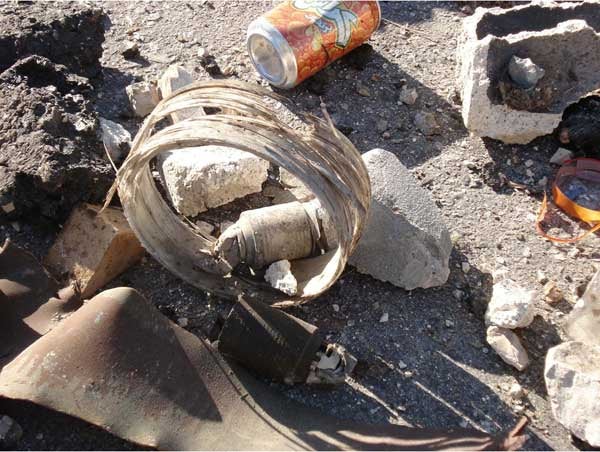
Picture of PTAB submunitions piled up near Bagram, Afghanistan, in 2002. These were part of a munition dump containing 60,000 tons of unexploded ordnance. Image courtesy of John Rodsted and Norwegian People's Aid. Downloaded from Norwegian People's Aid.
Thursday, 24 May 2007
Lima: Schedule Switcheroo
 The Lima Conference on cluster munitions got off to a solid start this morning with a presentation by Cluster Munition Coalition (CMC) representative Branislav Kaperanovic, a Serbian former clearance worker and cluster munition victim who expressed his hope for broadening support for the Oslo Process. Representatives of two countries affected by cluster munitions, Lebanon and Cambodia, then took the podium in succession. Neither are producers or users of cluster munitions, yet both are among the most heavily affected countries in the world. All of these speakers sounded notes of urgency about the need to deal with the effects of cluster munitions at the international level, knowing firsthand their effects.
Peru, the Conference chair introduced the programme of work for the three-day meeting, which will revolve around thematic discussions. But springs began popping out of the sofa when France proposed that discussion of “general obligations, scope of application and definitions”, which was scheduled for Friday morning, be discussed much sooner. Over the next 45 minutes these comments were echoed by a number of (mostly European) states keen to move discussion of definitions ahead of what they considered “less important” issues such as victim assistance, clearance, storage and stockpile destruction, and transparency.
However, this proposal encountered resistance from other present, especially developing and affected countries, as well as other states closely associated with the Oslo Process. One of them, Austria, proposed a winning compromise: switch the Friday morning discussions for those scheduled for Thursday afternoon.
Why all this fuss over when to discuss definitions and obligations? Those arguing for the change argued that the Lima Conference should make it clear from the beginning exactly what weapons were being discussed in the context of regulation of prohibition. Earlier Disarmament Insight posts have noted that a key issue for any international instrument to address the humanitarian impacts of cluster munitions is that of defining exactly what will be regulated or prohibited, not least because a very broad definition could go well beyond the comfort zones of many.
Fair enough. But this concern can detract from a broader point (and underlined earlier in the morning by Cambodia) that the Conference has the task of working toward addressing “both existing and potential suffering” associated with these weapons. These go beyond issues of regulation to measures to dispose of unexploded submunitions and assist victims, for example. So many eyes rolled when the view was put forward implying these are just downstream issues.
Another inevitable talking point concerned the relationship between the Oslo Process and the Convention on Certain Conventional Weapons (CCW). Though a few states expressed a preference for negotiating in one forum over the other, the majority expressed their support for whichever forum could, in practice, address the issues at hand in an effective manner.
On the whole, it was a long day. But spirits remain positive: a successful compromise on a small change in schedule that nevertheless reflected a big point was negotiated. And, on substantive issues, a lot of common ground was recognized.
Check in over the next few days for further impressions of the Lima talks, including on stockpile storage and destruction, as well as on the “dangerous definitions” discussions.
This is a guest blog from James Stocker. Jamie is a researcher on UNIDIR’s project on “The humanitarian impacts of cluster munitions: practitioners’ perspectives”.
References
The Lima Conference Chair’s discussion text can be downloaded in English and Spanish from the Cluster Munition Coalition’s website at: http://www.stopclustermunitions.org.
Photo of the Machu Picchu, the "Lost City of the Incas" (retrieved from Wikipedia).
Wednesday, 23 May 2007
Civil Society Forum Sets the Tone for the Lima Conference
I'm Jamie Stocker and, over the next few days, I’ll be posting updates on the progress of the international conference I’m attending in Lima, Peru, on cluster munitions, which starts today and finishes on Friday. This conference follows the Oslo Conference held in February (see previous posts) and seeks to both broaden support for its goals and deepen discussions on “cluster munitions that cause unacceptable harm to civilians”.
Yesterday, the Cluster Munition Coalition (CMC) hosted a Regional Civil Society Forum in Lima on “Taking Action On Cluster Munitions”, which I attended as an observer. This forum had several goals, including trying to set the tone for the Lima conference of states, attracting media attention (including from what I have been told is a very interested Peruvian media), countering arguments against efforts to address through regulation or prohibition the humanitarian impacts of cluster munitions, as well as outlining the CMC’s “expectations” on what it wants to see come out of the Oslo process.
Unfortunately, there isn’t space in this short post to give a comprehensive overview of the day’s proceedings. Among those speaking at the Forum, however, were Nobel Peace Prize laureate Jody Williams and Peruvian Ombudswomen Beatriz Merino. Rae McGrath of Handicap International began the morning English language session with a discussion of the clusters issue, driving home a point about the indiscriminate effect of cluster munitions by “scattering” a handful of (thankfully unused) teabags from the breakfast room among the audience.
Further highlights included two further statements read on behalf of Nobel Peace Prize laureates. In the first statement, South African Anglican Archbishop Desmond Tutu called on African states to play a leading role in the clusters munition campaign, noting that while African nations had been heavily involved in the process leading to the mine ban (Ottawa) treaty, only 4 of 47 signatories of the Oslo Declaration were from Africa.
The second statement on behalf of a group of six women Nobel Peace laureates praised the Oslo Process’s efforts to address “these especially pernicious weapons of ill repute” (crediting Steve Goose of Human Rights Watch with coining this phrase). This list of supportive Nobel Peace laureates was later further expanded, as a Costa Rican representative underlined the support of President Oscar Arias, who received the prize in 1987 for his efforts to end conflicts in several Central American countries.
Beyond political statements, those present also got down to looking at aspects of the issues surrounding cluster munitions in some depth, and there were presentations by a number of experts and NGOs. Many of these talks were sophisticated in dissecting the types of arguments used for the continued military utility of cluster munitions (for instance, see Human Rights Watch’s document, “Myths and Realities about Cluster Munitions” – reference below. See also their short film embedded in this post.) Moreover, some seemed to directly address elements of various proposals and discussion papers circulated at the ICRC meeting in Montreux in April and the Convention on Certain Conventional Weapons (CCW) informal meeting in Geneva last week.
The Forum was also an unprecedented opportunity to discuss cluster munitions in the Latin American regional context, including confirmed or alleged use of this weapon in several countries.
On the whole, the presenters were well-organized and expressed conviction and clarity of purpose. It will be interesting to see to what extent states attending the Lima Conference follow this example as they move to address these issues over the next days and months.
I’ll keep you posted.
This is a guest blog from James Stocker. Jamie is a researcher on UNIDIR’s project on “The humanitarian impacts of cluster munitions: practitioners’ perspectives”.
References
The Oslo Declaration can be downloaded here.
Human Rights Watch, “Myths and Realities about Cluster Munitions”: http://www.hrw.org/campaigns/clusters/myths0307/.
Human Rights Watch, short film on cluster munitions available on Youtube: http://www.youtube.com/watch?v=TpGMiAlVM6g.
More information about UNIDIR’s project on “The humanitarian impacts of cluster munitions: practitioners’ perspectives” is at: http://www.unidir.org/bdd/fiche-activite.php?ref_activite=339.
Tuesday, 22 May 2007
Drawing a circle around cluster munitions
Last Friday, in our last Disarmament Insight post, Patrick Mc Carthy noted the launch of a report by the non-governmental organisation (NGO) Handicap International (HI) entitled  “Circle of Impact: The Fatal Footprint of Cluster Munitions on People and Communities”. It follows Handicap International’s preliminary report about the socio-economic effects of cluster munitions, “Fatal Footprint: The Global Human Impact of Cluster Munitions,” released in early November 2006.
To briefly recap, “Fatal Footprint” identified 11,044 casualties (3,830 killed, 5,581 injured) directly related to cluster munition use in 23 countries and territories. 98% of these casualties were reportedly civilians. With 91% of such casualties occurring in countries with incomplete or zero data collection, it’s also highly likely that many casualties go unrecorded, HI noted.
Authorities in only three of the 23 countries and territories in HI’s report collected data on casualties while in conflict. Moreover, many victims in high-use areas like Afghanistan and Cambodia go unreported altogether, and many others caused by unexploded submunitions aren’t differentiated from those caused by other explosive remnants of war. A lack of information about specific casualties caused by cluster munitions during or after strikes – like who was involved and what they were doing – is an issue for any comprehensive effort at casualty data collection. HI estimated that only about 10% of casualty information was available in its November 2006 report.
In its more comprehensive “Circle of Impact” report released last week, HI “calls for a ban on cluster munitions and for assistance to civilians”. The total number of casualties it quoted as caused by cluster munitions rose to 13,306 (5,475 killed, 7,246 injured) in 25 countries and territories. The overall focus of the new report is on the civilian victims and the broader socio-economic challenges presented by cluster munition use during, and long after, conflict. Some country-specific recommendations of ways forward were offered, along with extensive data analysis.
HI’s reports are cautious steps toward building a clear picture of what the effects of cluster munitions really are. It builds on useful work already done by other actors like the International Committee of the Red Cross, Landmine Action UK, Human Rights Watch and, indeed, UNIDIR. But as HI would be the first to admit, this picture is still very incomplete.
HI’s press-pack distributed to journalists in Geneva last week to accompany its “Circle of Impact” report noted its launch “just one week before states gather in Lima, Peru (23-25 May), to discuss a draft text of a treaty to ban cluster munitions and create a framework for cooperation and assistance to survivors and communities affected by this weapon by 2008”.
In public, HI and other NGOs are highly optimistic about the progress the Lima meeting will make in negotiating a treaty text to address the humanitarian impacts of cluster munitions. This needs to be taken with a grain of salt: while Peru, as chair of that meeting, has distributed a discussion paper containing a sample text of what a future instrument might look like, it seems unlikely that governments will have time to briefly discuss more than the broad themes of an agreement in just three days. More likely, negotiators won’t get down to textual brass tacks until later this year, either in Oslo in early December as the next chapter in the unfolding story of the “Oslo Process”, or (much less likely) in the context of the Convention on Certain Conventional Weapons in Geneva.
Whatever the caveats necessary on “Circle of Impact” because of the limits of data gathering, the report’s real significance is in its timing. Emerging only days before the Lima meeting, HI’s work reinforces the message about the seriousness of the hazard created by cluster munitions – something that humanitarian practitioners have been trying to get through to the international community for a while.
The “Circle of Impact” press release also notes that already such concerns have “resulted in at least 55 countries… taking initiatives towards a prohibition on cluster munitions.” This strikes me as premature. A lot is going to hinge on negotiators eventually defining what a cluster munition that causes “unacceptable harm” to civilians is in the terminology of the February 2006 Oslo Declaration (see previous posts). That’s ultimately a political question, despite legal and technical dimensions, and will need considerable skill to settle. Meanwhile, as the Lima meeting begins, some states participating recognise humanitarian concerns about cluster munitions and are willing to respond, but nevertheless view them as useful elements of their military arsenals. They don’t seem willing to give up cluster munitions with explosive submunitions entirely, at least not yet.
Watch this space for updates about work in Lima.
Ashley Thornton
References
The final report, Circle of Impact: The Fatal Footprint of Cluster Munitions on People and Communities, and the HI Press Release are available here.
Photo of a B-1B Lancer unleashing cluster munitions (retrieved from Wikipedia).
Friday, 18 May 2007
Facing the facts on cluster munitions
 People who live and work in areas where cluster munitions have been used are only too familiar with the horrific humanitarian impact of this weapons system, both at the time of use and for long after the bombs have stopped falling.
NGOs and UN bodies have been documenting this impact for years, in greater and greater disturbing detail. But on Wednesday (May 16), the NGO Handicap International sketched the most complete picture yet of the impact that cluster munitions have on the lives, limbs and livelihoods of the people unfortunate enough to live in their midst. Their report makes for sobering reading. Its key findings include:
- The available data shows that cluster munitions have nearly always been used in or near civilian populated areas against unknown or unspecified targets
- 400 million people currently live among unexploded cluster sub-munitions
- 98 percent of cluster sub-munition casualties are civilians, killed and injured while returning home in the aftermath of conflict or while going about their daily tasks to survive
- The majority of victims are poor, uneducated males, many of them boys under the age of 18
These are just some of the hard facts that will have to be faced by the governments gathering in Lima, Peru, on May 23-25 to take the first step along the path agreed in Oslo in February (see the May 15 and April 24 postings by John Borrie for background on the "Oslo process" on cluster munitions).
The Oslo declaration does not - necessarily - foresee a complete ban on cluster munitions, but rather a ban on those cluster munitions that cause "unacceptable harm" to civilians. The Handicap International report has made it more difficult to claim that some cluster munitions cause harm that is "acceptable" in any humane sense of the word.
To pass the muster of international humanitarian law, the military advantage to be gained from the use of a weapon must be proportional to the civilian casualties and damage to civilian objects caused by the attack. This notion of "proportionality," it seems to me, is closely related to the concept of "unacceptable harm" that will be at the heart of the Oslo process negotiations.
Clearly, a 98 percent civilian casualty rate is neither proportional nor acceptable. It is also difficult to imagine what cumulative military advantage could be worth 400 million people living in daily fear of losing their lives or their loved ones.
Patrick Mc Carthy
References
"Circle of Impact: The Fatal Footprint of Cluster Munitions on People and Communities." Handicap International - http://en.handicapinternational.be/index.php
Photo by Dave Mitchell on Flickr - http://www.flickr.com/photos/davemitchell/279352521/. The photo is of a child picking up a fake cluster sub-munition at a Derry Anti-War Coalition demonstration (Northern Ireland).


